Personalized Introduction
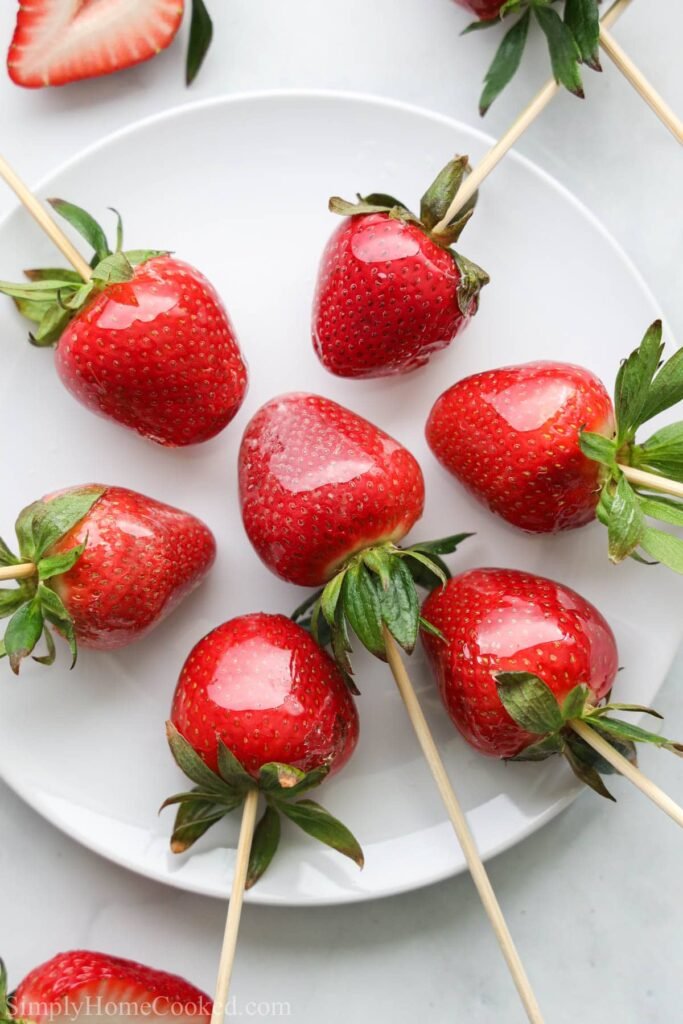
If you’ve ever seen those beautiful fruit skewers covered in a perfectly clear, crunchy sugar shell, you’re looking at Tanghulu. This traditional Chinese street-food treat is surprisingly simple to make at home. Fresh strawberries, grapes, or other fruits are dipped into hot sugar syrup and allowed to cool until the coating becomes thin, glossy, and wonderfully crisp.
I love making Tanghulu because it transforms simple fresh fruit into something that feels like a special dessert. The contrast between juicy fruit and the hard, crackly candy coating makes every bite incredibly fun.
The key to great Tanghulu is getting the sugar syrup to the correct temperature and keeping the fruit completely dry. Once you understand those two tricks, you can make beautiful candied fruit skewers in your own kitchen.
Recipe Origin & Story
Tanghulu is a traditional Chinese snack consisting of fruit coated in hardened sugar syrup and served on skewers. It is especially associated with northern China and is traditionally made with hawthorn berries, although strawberries, grapes, blueberries, mandarins, and other fruits are now commonly used.
The name is often associated with the distinctive appearance of fruit covered in a glossy sugar shell. When the coating sets, it becomes hard and brittle, creating the satisfying crack that makes Tanghulu so popular.
Today, Tanghulu has become popular far beyond China, especially on social media, where the colorful fruit and glass-like candy coating make it a particularly eye-catching treat.
Ingredient Spotlight
- Fresh Fruit: Strawberries and grapes are especially easy to use, but many firm fruits can work.
- Granulated Sugar: Creates the hard candy shell around the fruit.
- Water: Helps dissolve the sugar while the syrup begins cooking.
- Corn Syrup: Optional, but a small amount can help reduce unwanted crystallization.
- Wooden Skewers: Make the fruit easy to dip and serve.
Nutritional Benefits
Fresh fruit provides vitamins, minerals, fiber, and antioxidants. However, Tanghulu is also coated in a significant amount of sugar, so it is best enjoyed as an occasional sweet treat.
Using naturally sweet fruit allows you to enjoy the fresh fruit flavor beneath the candy shell while keeping the recipe simple.
Adaptable Variations
- Strawberry Tanghulu: Use whole fresh strawberries for a classic colorful version.
- Grape Tanghulu: Green or red seedless grapes create small, crunchy candy-coated bites.
- Blueberry Tanghulu: Use firm blueberries for smaller skewers.
- Mixed Fruit: Combine strawberries, grapes, blueberries, and mandarin segments.
- Mandarin Tanghulu: Use peeled mandarin segments, making sure the surface is completely dry.
- Mini Tanghulu: Use small fruit pieces and shorter skewers for party-sized treats.
Cooking Science Explained
The most important part of Tanghulu is the sugar syrup. Sugar and water are heated until the water evaporates and the syrup reaches the hard-crack stage, around 300–310°F (149–154°C).
At this temperature, the syrup becomes concentrated enough to harden into a glass-like candy coating as it cools. If the syrup is not hot enough, the coating may remain sticky or soft.
A candy thermometer is the easiest way to check the temperature accurately. If you don’t have one, you can test a small amount of syrup in ice-cold water. It should immediately harden into brittle threads or a hard piece that cracks rather than bends.
Moisture is another major factor. Water on the fruit can cause the hot sugar to slide off or become cloudy and sticky. The fruit must therefore be washed, dried, and allowed to become completely dry before dipping.
Easy, Step-by-Step Recipe
Ingredients
- 12–15 fresh strawberries or approximately 2 cups seedless grapes
- 2 cups granulated sugar
- ½ cup water
- 1 tablespoon light corn syrup, optional
- Wooden skewers
- Ice water, for testing the syrup if needed
Instructions
- Wash the fruit thoroughly and remove any stems, leaves, or damaged pieces.
- Dry the fruit extremely well using paper towels.
- Allow the fruit to air-dry for additional time so there is no visible moisture remaining.
- Thread the dry fruit onto wooden skewers. Avoid packing too many pieces onto one skewer.
- Line a baking sheet or large tray with parchment paper.
- Place the sugar, water, and optional corn syrup into a clean, dry saucepan.
- Heat the mixture over medium heat and stir gently only until the sugar dissolves.
- Once the syrup begins boiling, stop stirring.
- Continue cooking until the syrup reaches approximately 300–310°F (149–154°C) on a candy thermometer.
- Watch the syrup carefully as it approaches the target temperature because it can become too dark or burn quickly.
- Remove the saucepan from the heat once the hard-crack stage is reached.
- Allow the bubbling to settle for a few seconds.
- Carefully hold one fruit skewer and quickly dip the fruit into the hot syrup.
- Rotate the skewer so the fruit receives a thin, even coating.
- Let excess syrup drip back into the saucepan.
- Immediately place the coated fruit onto the parchment paper.
- Repeat with the remaining fruit, working quickly while the syrup remains fluid.
- Allow the candy coating to cool for several minutes until completely hard.
- Serve the Tanghulu shortly after the coating sets for the best crisp texture.
Practical & Valuable Tips
- Dry the Fruit Completely: This is one of the most important steps. Even a small amount of water can interfere with the candy coating.
- Use a Candy Thermometer: Accurate temperature makes the process much more reliable.
- Don’t Stir Boiling Syrup: Stirring after the sugar has dissolved can encourage crystallization.
- Use a Clean Pan: Residue or sugar crystals around the sides can affect the syrup.
- Dip Quickly: The syrup thickens as it cools, so work efficiently.
- Keep the Coating Thin: A thin candy shell gives Tanghulu its characteristic crisp texture without overpowering the fruit.
- Don’t Refrigerate Immediately: Humidity can cause the sugar coating to become sticky.
- Use Firm Fruit: Very soft or overripe fruit can release moisture and make dipping difficult.
Make-Ahead & Batch-Cooking
Tanghulu is best made shortly before serving because the hard sugar coating can absorb moisture from the air and gradually lose its crisp texture.
You can prepare the fruit and skewers ahead of time. Keep the fruit dry and at room temperature until you’re ready to make the sugar coating.
If making several batches, work with smaller amounts of fruit at a time. This allows you to dip each skewer while the syrup is still at the ideal consistency.
Avoid storing finished Tanghulu in the refrigerator unless absolutely necessary because condensation can make the candy shell sticky.
Eco-Friendly Kitchen Hacks
- Use slightly imperfect but firm fruit that might otherwise be overlooked.
- Reuse wooden skewers only when they are designed and safe for reuse.
- Line your tray with reusable silicone baking mats where appropriate.
- Make small batches to avoid leftover candied fruit going soft.
- Use extra fruit in smoothies, fruit salads, or yogurt if you have more than needed.
Pairing Suggestions
- Fresh: Serve alongside additional fresh fruit.
- Drinks: Pair with iced tea, lemonade, milk tea, or sparkling water.
- Party Dessert: Arrange several colorful fruit skewers on a serving platter.
- Sweet Table: Serve with cookies, brownies, or small cakes.
- Brunch: Add a few fruit skewers to a breakfast or brunch spread.
Frequently Asked Questions
-
What fruit is traditionally used for Tanghulu?
Traditional Tanghulu is commonly associated with hawthorn berries. Today, strawberries, grapes, blueberries, and other fruits are widely used.
-
Why is my Tanghulu coating sticky?
The syrup may not have reached the hard-crack stage, or the finished candy may have been exposed to humidity or moisture. Make sure the syrup reaches approximately 300–310°F (149–154°C) and keep the finished fruit in a dry environment.
-
Why won’t the sugar stick to my fruit?
The fruit may still have moisture on its surface. Dry the fruit extremely well before dipping.
-
Can I make Tanghulu without a candy thermometer?
Yes, although a thermometer is much more reliable. You can test the syrup by dropping a small amount into ice-cold water. It should harden immediately and become brittle.
-
Can I use frozen fruit?
Fresh firm fruit is strongly recommended. Frozen fruit usually releases too much moisture as it thaws, making it difficult to create a crisp candy shell.
-
How long does Tanghulu stay crunchy?
It is best eaten soon after the candy coating sets. Humidity and moisture can gradually soften the shell.
Important Safety Note
The sugar syrup used for Tanghulu becomes extremely hot and can cause serious burns. Use a sturdy saucepan, keep children and pets away from the cooking area, and never touch or taste the hot syrup. Use heat-resistant utensils and handle the finished skewers carefully until the coating has completely hardened.
Call to Action
If you’ve been curious about making Tanghulu at home, this recipe is a fun place to start. The combination of juicy fresh fruit and a crisp, glass-like sugar shell makes this treat incredibly satisfying and visually beautiful.
Try strawberries for a classic colorful version, or make a mixed-fruit platter with grapes, blueberries, and other firm fruits. Once you get the sugar temperature right, you can create your own beautiful Tanghulu combinations at home.
Bonus: Your Kitchen Notes
The biggest secret to successful Tanghulu is preparation. Have your fruit washed, dried, skewered, and ready before you begin cooking the syrup. Once the sugar reaches the correct temperature, you need to work quickly.
If the syrup begins becoming too thick while you’re dipping, you can carefully return the saucepan to very low heat for a short time to loosen it. Keep a close eye on the temperature and never leave hot sugar unattended.
For an especially beautiful presentation, alternate different colored fruits on the skewers. Red strawberries, green grapes, and blueberries create a naturally colorful dessert that looks stunning on a serving platter.
Tanghulu is best enjoyed immediately after the candy coating has completely hardened. Take a bite and listen for that satisfying crisp crack before reaching the juicy fruit inside.
This easy Tanghulu recipe turns fresh fruit and simple sugar into a fun, glossy, crunchy treat. With completely dry fruit, properly cooked sugar syrup, and a little patience, you can recreate this popular candied fruit snack right in your own kitchen.