Personalized Introduction
There is something about a perfectly cooked filet mignon that makes an ordinary dinner feel like a celebration. You know that moment when you bring a beautiful steak to the table, slice into the center, and see that tender, juicy texture? That is exactly what I want when I make steak at home.
For a long time, I thought filet mignon was something better left to restaurants. It seemed like the kind of steak that needed a professional kitchen, an expensive grill, and years of experience. But honestly, you can make an incredible filet mignon right in your own oven.
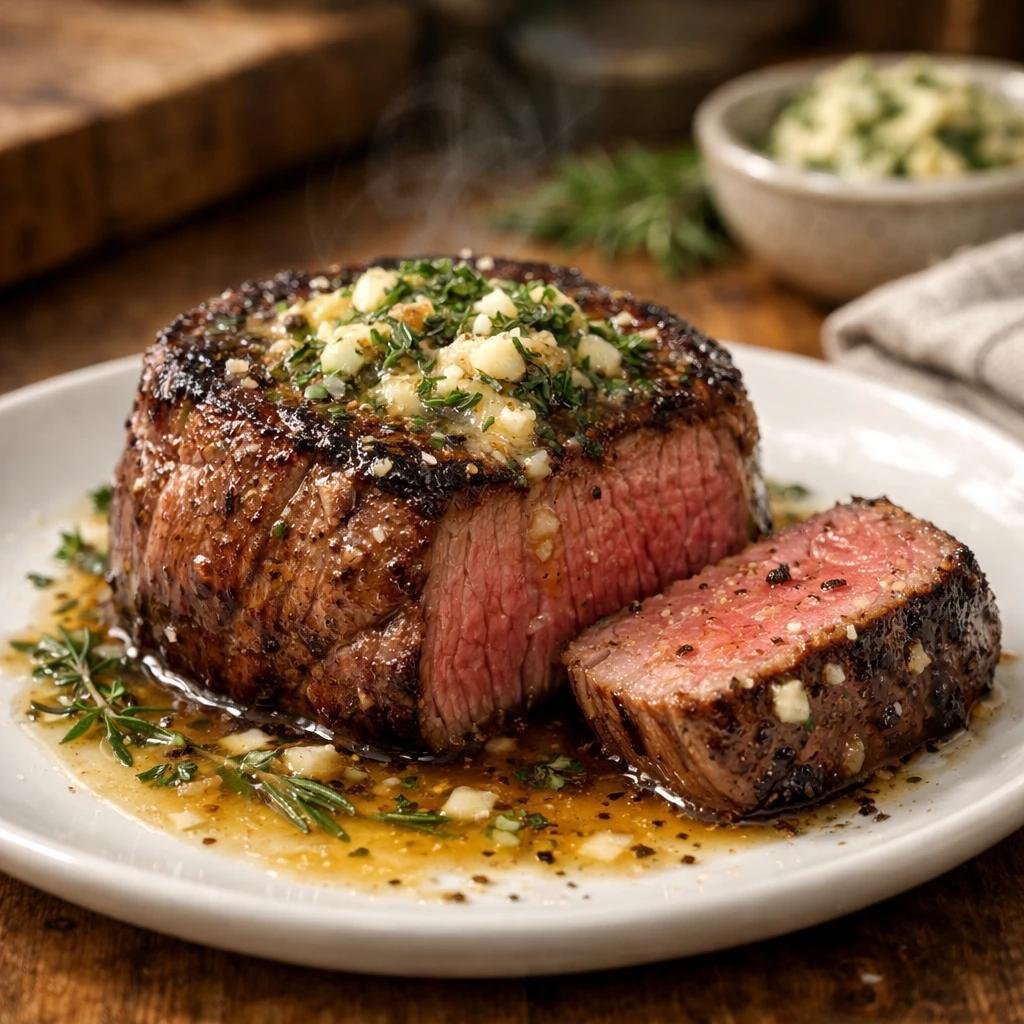
This oven-baked filet mignon recipe keeps things simple. The steaks are seasoned with salt, pepper, garlic, and herbs, quickly seared in a hot skillet, and then finished in the oven. The result is a beautifully browned outside with a tender center and plenty of rich beefy flavor.
And the best part? You do not need a complicated sauce. A little butter, garlic, and fresh herbs can turn the juices left in the skillet into a wonderfully simple finishing touch.
If you are planning a date-night dinner, birthday meal, holiday celebration, or simply want to make Tuesday night feel special, this is the recipe I would put at the top of my list.
Recipe Origin & Story
Filet mignon comes from the tenderloin, a long, relatively lean muscle that does very little work on the animal. Because of that, it is prized for its exceptionally tender texture.
The name filet mignon is French, and the steak has become especially associated with elegant restaurant-style dining. But there is no reason you cannot bring that experience into your own kitchen.
My favorite method combines two simple cooking techniques: searing and oven finishing. The skillet gives the steak a deeply browned exterior, while the oven allows the center to cook more evenly.
It is a technique that feels fancy but is actually very approachable. Once you learn how to control the heat and use a thermometer, making filet mignon becomes much less intimidating.
The key is not to obsess over a precise number of minutes. Steak thickness, starting temperature, pan material, and oven temperature can all affect cooking time. A thermometer gives you much more reliable information than the clock.
Ingredient Spotlight
- Main Star: Filet mignon is the star because of its naturally tender texture. Choose steaks that are evenly cut and preferably around 1½ to 2 inches thick for this cooking method.
- Secret Boost: Garlic butter adds richness and a wonderful aroma. Adding it toward the end prevents the butter and garlic from burning while still giving the steak plenty of flavor.
- Quality Tips: Look for steaks with a bright, fresh appearance and consistent thickness. If you have a choice, thicker steaks are easier to manage because you can develop a crust without quickly overcooking the center.
Olive oil: A small amount helps the steak make good contact with the hot skillet and encourages browning.
Kosher salt: Salt brings out the natural flavor of the beef. Season both sides generously but evenly.
Black pepper: Freshly ground black pepper adds gentle heat and a classic steakhouse flavor.
Garlic: Fresh garlic gives the butter a savory, aromatic quality that pairs beautifully with beef.
Fresh rosemary and thyme: These herbs add an earthy fragrance without hiding the flavor of the steak.
Butter: Butter gives the finished steak a rich, silky finish. You can also use unsalted butter so you have better control over the salt level.
Nutritional Benefits
Filet mignon is a protein-rich food and can be a satisfying centerpiece for a balanced meal. Because it is relatively lean compared with some other steak cuts, it can work well when served alongside plenty of vegetables.
Fresh herbs and garlic provide flavor without requiring a heavy sauce. Garlic also contains naturally occurring plant compounds, while herbs allow you to add plenty of aroma with very few calories.
For a balanced dinner, I like to serve filet mignon with roasted asparagus, broccoli, green beans, or a fresh salad. You can add a modest serving of potatoes or rice if you want something more filling.
Of course, filet mignon is still a rich food, especially when finished with butter, so think of it as the centerpiece of a meal rather than the entire meal.
Adaptable Variations
- Dietary Swaps: Use olive oil instead of butter for a dairy-free version. Keep the seasoning simple and naturally gluten-free.
- Flavor Twists: Add smoked paprika, cracked pepper, rosemary, thyme, garlic, shallots, or a little Dijon mustard to your finishing butter.
- Seasonal Spins: Serve with asparagus and peas in spring, grilled corn and tomatoes in summer, roasted squash in fall, or creamy mashed potatoes and Brussels sprouts in winter.
Garlic Herb Filet: Add minced garlic, rosemary, thyme, and parsley to the butter before spooning it over the steak.
Peppercorn Filet: Coat the steaks lightly with cracked black pepper before searing, then serve with a creamy peppercorn sauce.
Rosemary Butter Filet: Add fresh rosemary and a little lemon zest to softened butter for a bright herbal finish.
Steakhouse Style: Serve the filet with roasted potatoes, sautéed mushrooms, asparagus, and a small dish of garlic butter.
Light Version: Skip the butter and finish the steak with fresh herbs, lemon zest, and a drizzle of extra-virgin olive oil.
Cooking Science Explained
Why sear the steak first? A hot skillet creates the deep brown crust that gives steak much of its appealing roasted flavor. This browning comes from complex reactions that occur when the surface of the meat gets hot and relatively dry.
Why finish it in the oven? After searing, the oven provides steady heat that helps cook the center without requiring you to keep flipping the steak over a very hot burner.
Why use a thermometer? Cooking time alone cannot reliably tell you the internal temperature of a steak. The USDA recommends that whole beef steaks reach a minimum internal temperature of 145°F (63°C) and rest for at least 3 minutes. :contentReference[oaicite:0]{index=0}
This is also why I do not recommend judging doneness by color alone. The USDA notes that appearance is not a reliable indicator of safety or doneness; a food thermometer is the dependable way to check. :contentReference[oaicite:1]{index=1}
When measuring the steak, insert the thermometer into the thickest part, avoiding fat or gristle. :contentReference[oaicite:2]{index=2}
Easy, Step-by-Step Recipe
Ingredients
- 4 filet mignon steaks, about 1½–2 inches thick
- 1 tablespoon olive oil
- 2 teaspoons kosher salt
- 1 teaspoon freshly ground black pepper
- 1 teaspoon garlic powder
- 1 tablespoon unsalted butter
- 3 garlic cloves, lightly crushed
- 2 sprigs fresh rosemary
- 2 sprigs fresh thyme
- 1 tablespoon chopped fresh parsley, for garnish
- Freshly ground black pepper, for finishing
Instructions
- Bring the steaks out: Remove the filet mignon from the refrigerator and let it sit briefly while you prepare the rest of the ingredients. Pat the steaks very dry with paper towels.
- Preheat the oven: Heat your oven to 400°F (200°C). Place an oven-safe cast-iron or heavy skillet on the stovetop.
- Season generously: Rub each filet with a thin coating of olive oil. Season both sides with kosher salt, black pepper, and garlic powder.
- Heat the skillet: Place the skillet over medium-high to high heat. Give it enough time to become very hot before adding the steak.
- Sear the first side: Place the steaks into the hot skillet. Allow them to sear without constantly moving them. Cook for approximately 2–3 minutes, or until a deep golden-brown crust develops.
- Turn the steaks: Carefully flip each filet and sear the second side for another 2–3 minutes.
- Add aromatics: Reduce the stovetop heat slightly. Add the butter, crushed garlic, rosemary, and thyme to the skillet.
- Baste: As the butter melts, carefully spoon the fragrant butter over the steaks several times. This gives the surface extra richness and herb flavor.
- Transfer to the oven: Place the entire oven-safe skillet in the preheated oven.
- Check early: Begin checking the internal temperature after several minutes. The exact cooking time will depend heavily on steak thickness and your desired level of doneness.
- Use a thermometer: Insert the thermometer into the thickest part of the steak. For food safety, whole beef steaks should reach at least 145°F (63°C), followed by a minimum 3-minute rest. :contentReference[oaicite:3]{index=3}
- Remove from the oven: Once the steak reaches your target temperature, carefully remove the skillet. Remember that the skillet and handle will be extremely hot.
- Rest: Transfer the filets to a clean plate or cutting board and allow them to rest for at least 3 minutes.
- Garnish: Spoon a little of the garlic herb butter over each steak. Sprinkle with fresh parsley and a little cracked black pepper.
- Serve: Serve immediately with your favorite steakhouse-style sides.
One important tip: do not walk away while the skillet is heating. A screaming-hot pan is useful for searing, but you want to control the heat once the butter and garlic are added. Burnt garlic can quickly become bitter.
Also, if you prefer your steak cooked beyond the USDA minimum temperature, simply continue cooking until it reaches your preferred level of doneness. Personal preference and food safety are separate considerations.
Practical & Valuable Tips
- Storage: Store leftover cooked steak in an airtight container in the refrigerator and use it within 3–4 days. USDA guidance recommends using most cooked leftovers within 3–4 days. :contentReference[oaicite:4]{index=4}
- Serving Ideas: Serve with mashed potatoes, roasted asparagus, sautéed mushrooms, green beans, crispy potatoes, or a simple garden salad.
- Substitutions: Use ghee or olive oil instead of butter. Rosemary can be replaced with thyme, parsley, or chives.
Dry the steak well: Moisture on the surface can interfere with browning. Paper towels are your friend here.
Do not overcrowd the pan: If you are cooking many steaks, work in batches. Giving each steak enough space helps maintain the high heat needed for a good sear.
Use a heavy skillet: Cast iron is especially useful because it retains heat well.
Do not constantly flip: Give the steak enough time to develop a crust before turning it.
Rest before slicing: It is tempting to cut immediately, especially when you are hungry, but a short rest makes serving much easier.
Keep the knife sharp: A sharp knife lets you slice the filet cleanly without crushing the tender meat.
Make-Ahead & Batch-Cooking
Filet mignon is best cooked shortly before serving, but you can make the preparation easier ahead of time.
Season the steaks a little before cooking and keep them refrigerated until you are ready. You can also prepare your garlic and herbs in advance and have your skillet, thermometer, and serving plates ready to go.
If you are hosting dinner, prepare your side dishes first. Roasted potatoes, asparagus, mushrooms, and salad can all be ready before you begin cooking the steaks.
This way, the filet mignon can be the final thing you cook. Once the steaks are finished and rested, everything else can go straight onto the table.
Leftover filet can be sliced thinly and used in steak sandwiches, salads, wraps, quesadillas, breakfast hash, or rice bowls. I actually love leftovers this way because you get an entirely different meal from the same steak.
When reheating, use gentle heat rather than blasting the steak in a very hot oven. The goal is to warm it without turning a tender filet into a dry one.
Eco-Friendly Kitchen Hacks
- Use one oven-safe skillet for searing and baking to reduce dishes.
- Cook extra vegetables in the same oven while the steak finishes.
- Use leftover steak in salads, sandwiches, wraps, or breakfast dishes.
- Save herb stems for homemade stock or flavored butter.
- Store leftover steak in reusable airtight containers.
- Plan side dishes that use the same oven temperature as the steak to save energy.
One of my favorite tricks is to roast vegetables while the oven is already hot. A tray of asparagus, broccoli, mushrooms, or potatoes can turn a simple steak into a complete dinner without needing another appliance.
If you have leftover herbs, do not throw them away. Chop them finely and mix them into softened butter. Roll the butter into a small log, refrigerate or freeze it, and use it later on steak, vegetables, bread, or baked potatoes.
Pairing Suggestions
- Beverages: Sparkling water with lemon, iced tea, lemonade, or a glass of red wine.
- Sides & Sauces: Garlic mashed potatoes, crispy roasted potatoes, asparagus, sautéed mushrooms, creamed spinach, green beans, Caesar salad, peppercorn sauce, or garlic herb butter.
For the ultimate classic steak-night plate, I love filet mignon with crispy roasted potatoes, sautéed mushrooms, and asparagus.
If you want something lighter, serve the steak with a fresh arugula salad dressed with lemon and olive oil. The peppery greens are a lovely contrast to the rich beef.
For a special occasion, add creamy mashed potatoes and roasted garlic mushrooms. It is simple, comforting, and feels wonderfully luxurious.
You can also serve a small bowl of garlic herb butter on the side. That way everyone can add as much as they like without covering the entire steak in sauce.
Frequently Asked Questions
- What temperature should filet mignon be cooked to?
For food safety, the USDA recommends cooking whole beef steaks to a minimum internal temperature of 145°F (63°C) and allowing them to rest for at least 3 minutes. :contentReference[oaicite:5]{index=5} - Can I cook filet mignon entirely in the oven?
Yes, but I recommend searing it first when using this recipe. The quick skillet sear develops a flavorful browned crust, while the oven finishes the center more gently. - Why is my filet mignon tough?
Filet mignon is naturally tender, so toughness is often related to overcooking or slicing immediately without allowing the steak to rest. Use a thermometer and avoid cooking it far beyond your desired temperature. - Do I need a cast-iron skillet?
No. A heavy oven-safe skillet works well. Cast iron is simply a popular choice because it holds heat effectively and is excellent for searing.
Call to Action
If you have always thought filet mignon was too complicated to make at home, I hope this recipe changes your mind.
You only need a few simple ingredients, a hot skillet, a reliable oven, and a thermometer. The result is an elegant steak dinner that can be ready without a complicated cooking process.
Save this recipe for your next steak night, share it with someone who loves a good filet, and make it the centerpiece of your next special dinner.
And remember, you can personalize it. Add rosemary, try a peppercorn crust, make a creamy mushroom sauce, or keep it beautifully simple with garlic butter and fresh herbs.
Heat up that skillet, season your filets, and get ready for a restaurant-style steak night right in your own kitchen.
Bonus: Your Kitchen Notes
This is your little space to make the recipe your own.
Write down the thickness of your steaks, how long they took in your oven, and the internal temperature you preferred. This is especially helpful because ovens and skillets can behave differently from kitchen to kitchen.
Did you use rosemary or thyme? Did you add mushrooms? Maybe you served the filet with crispy potatoes and a fresh salad?
Keep track of those little details. The next time you make filet mignon, you will have your own personal steak-night formula ready to go.
If you want more garlic flavor, add an extra clove to the butter. If you love pepper, use freshly cracked pepper instead of finely ground pepper. If you prefer a brighter finish, add a few drops of lemon juice to the herb butter.
You can even turn leftover steak into a completely different meal. Thinly slice it and add it to a toasted sandwich with caramelized onions. Or chop it into a salad with tomatoes, greens, blue cheese, and a simple vinaigrette.
That is what makes a good steak recipe so useful. It can be elegant enough for a celebration but flexible enough for everyday cooking.
So grab your filet mignon, get that skillet hot, and enjoy your own perfect steak night at home—tender, flavorful, beautifully browned, and finished with irresistible garlic herb butter.