Personalized Introduction
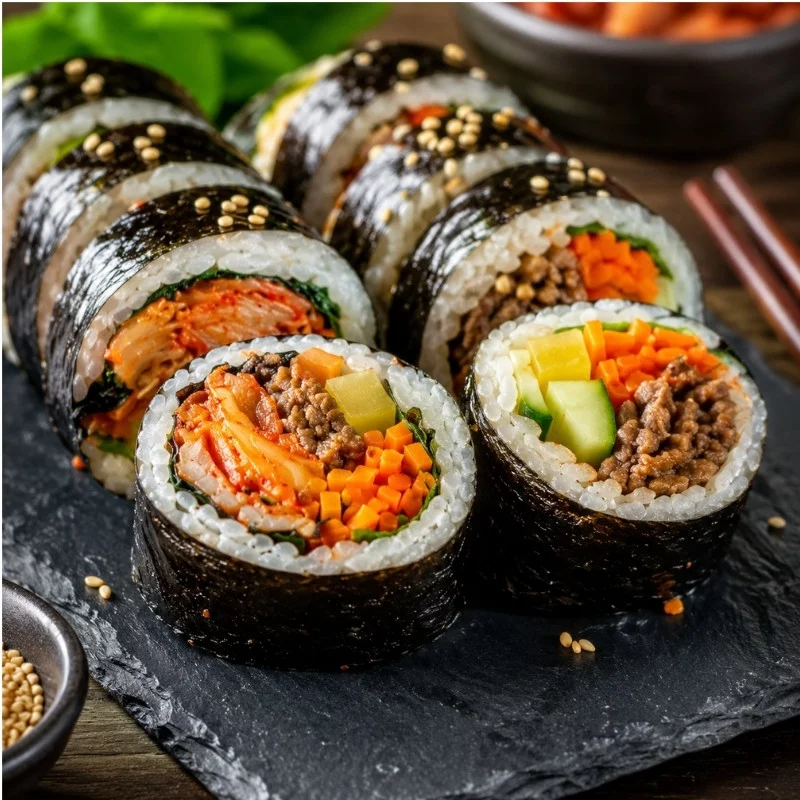
If you’ve never made kimbap at home, you’re in for a treat. These Korean seaweed rice rolls are colorful, flavorful, satisfying, and much easier to prepare than they may look. I love kimbap because you can fill it with a combination of savory vegetables, eggs, carrots, spinach, and seasoned beef, then roll everything into neat little slices.
Unlike sushi, traditional kimbap is typically seasoned with sesame oil and salt rather than sushi vinegar. The combination creates a delicious nutty, savory flavor that works beautifully with the colorful fillings.
Kimbap is perfect for lunch, picnics, school lunches, road trips, parties, or a simple family meal. Once you learn the basic rolling technique, you can customize the fillings with whatever you enjoy.
Recipe Origin & Story
Kimbap is a beloved Korean dish made by wrapping seasoned rice and various fillings in sheets of roasted seaweed. It is commonly sliced into bite-sized pieces, making it easy to pack and share.
There are many styles of kimbap, and fillings can vary depending on the region, family recipe, or occasion. Common ingredients include carrots, spinach, pickled radish, eggs, fish cake, beef, and other seasoned vegetables.
What makes kimbap so enjoyable is its balance of textures and flavors. Soft rice, crisp vegetables, savory fillings, nutty sesame oil, and roasted seaweed come together in every bite.
Ingredient Spotlight
- Rice: Short-grain white rice has the ideal sticky texture for rolling.
- Seaweed: Roasted Korean gim or nori provides a savory, crisp outer layer.
- Beef: Thinly sliced beef adds a delicious savory protein filling.
- Egg: Thin egg strips add richness, softness, and beautiful color.
- Vegetables: Carrots and spinach add freshness, color, and texture.
- Pickled Radish: Yellow pickled radish gives kimbap a sweet, tangy crunch.
- Sesame Oil: A small amount adds the characteristic nutty Korean flavor.
Nutritional Benefits
Kimbap can be a well-rounded meal because it combines carbohydrates from rice, protein from beef and eggs, and vegetables such as carrots and spinach.
You can easily make the rolls lighter by increasing the vegetables and reducing the amount of rice. You can also use lean beef, chicken, tofu, or additional vegetables depending on your preferences.
Adaptable Variations
- Tuna Kimbap: Replace the beef with tuna mixed with a little mayonnaise.
- Chicken Kimbap: Use thinly sliced cooked chicken seasoned with soy sauce and sesame oil.
- Vegetarian Kimbap: Skip the meat and add mushrooms, cucumber, avocado, tofu, or extra vegetables.
- Spicy Kimbap: Add spicy mayo, kimchi, or sliced Korean chili peppers.
- Cheese Kimbap: Add a thin strip of mild cheese for a creamy twist.
- Kimchi Kimbap: Add finely chopped, well-drained kimchi for extra tangy flavor.
- Egg Kimbap: Increase the amount of egg and add additional vegetables for a simple meat-free version.
Cooking Science Explained
The texture of the rice is especially important when making kimbap. Short-grain rice becomes sticky enough to hold the roll together without needing additional sauces or binders.
Allowing the cooked rice to cool slightly before assembling prevents the seaweed from becoming overly soft. The rice should still be warm or at room temperature, but not steaming hot.
The fillings should also be relatively dry. Excess moisture from vegetables or sauces can make the seaweed soggy and cause the roll to fall apart.
When rolling, applying gentle but firm pressure helps compress the rice and fillings into a tight cylinder. A bamboo rolling mat makes this much easier, although you can make kimbap without one.
Easy, Step-by-Step Recipe
Ingredients
For the Rice
- 3 cups cooked short-grain white rice
- 1 tablespoon sesame oil
- ½ teaspoon salt
- 1 teaspoon toasted sesame seeds
For the Beef
- 8 ounces thinly sliced beef
- 1 tablespoon soy sauce
- 1 teaspoon sesame oil
- 1 teaspoon sugar
- 1 clove garlic, minced
- ½ teaspoon black pepper
For the Fillings
- 4 sheets roasted seaweed
- 2 large eggs
- 1 medium carrot, cut into thin matchsticks
- 1 cup fresh spinach
- 4 strips yellow pickled radish
- 1 tablespoon vegetable oil
- Sesame seeds, for finishing
Instructions
- Cook the short-grain rice according to the package instructions.
- While the rice is still warm, gently mix it with sesame oil, salt, and sesame seeds.
- Set the rice aside to cool slightly. It should be warm or room temperature rather than steaming hot.
- In a small bowl, combine the beef with soy sauce, sesame oil, sugar, garlic, and black pepper.
- Heat a skillet over medium-high heat and cook the seasoned beef until browned and cooked through. Set aside.
- Beat the eggs with a small pinch of salt.
- Heat a lightly oiled skillet over medium heat and cook the eggs as a thin omelet.
- Transfer the omelet to a plate, let it cool slightly, and cut it into long thin strips.
- In the same skillet, lightly sauté the carrot strips until slightly tender but still crisp.
- Blanch or quickly sauté the spinach until wilted.
- Drain and gently squeeze excess moisture from the spinach. Season lightly with salt and sesame oil if desired.
- Set all the fillings near your work surface so they are ready for assembly.
- Place a bamboo rolling mat on a flat surface and put one sheet of roasted seaweed on top, shiny side down.
- Spread a thin, even layer of seasoned rice over approximately two-thirds of the seaweed. Leave the top edge uncovered.
- Arrange a small amount of beef, egg, carrot, spinach, and pickled radish in a horizontal line across the lower third of the rice.
- Begin rolling the seaweed away from you, using your fingers to keep the fillings tightly in place.
- Continue rolling while applying gentle pressure with the bamboo mat.
- When you reach the uncovered edge, lightly moisten it with a few drops of water to help seal the roll.
- Repeat with the remaining ingredients.
- Lightly brush the outside of each completed roll with sesame oil if desired.
- Sprinkle with toasted sesame seeds.
- Using a sharp knife, cut each roll into bite-sized slices.
- Wipe the knife with a slightly damp cloth between cuts if the rice begins sticking.
- Serve immediately or pack the kimbap for lunch or a picnic.
Practical & Valuable Tips
- Don’t Overfill: Too many fillings make the roll difficult to close and can cause it to fall apart.
- Use Slightly Warm Rice: Very hot rice can soften the seaweed too quickly.
- Keep Fillings Dry: Remove excess moisture from cooked vegetables before assembling.
- Use a Sharp Knife: A sharp knife creates cleaner slices without crushing the roll.
- Don’t Press Too Hard: Roll firmly enough to hold everything together without smashing the rice.
- Cut After Rolling: Allowing the finished roll to rest briefly makes slicing easier.
- Keep Your Hands Slightly Moist: A little water prevents rice from sticking to your fingers.
Make-Ahead & Batch-Cooking
Kimbap is excellent for meal preparation because most of the fillings can be prepared ahead of time. Cook the beef, vegetables, and egg in advance and refrigerate them separately.
When you’re ready to make the rolls, prepare fresh rice and assemble everything. This keeps the rice soft and the seaweed at its best texture.
If you’re preparing kimbap for a picnic or lunch, wrap the rolls tightly and keep them cool. For the best texture, kimbap is generally enjoyed the same day it is prepared.
You can also prepare extra fillings and use them in rice bowls, fried rice, omelets, or wraps throughout the week.
Eco-Friendly Kitchen Hacks
- Use leftover vegetables as kimbap fillings instead of letting them go to waste.
- Turn leftover cooked beef into rice bowls or stir-fries.
- Use extra egg strips in sandwiches, salads, or fried rice.
- Store prepared fillings in reusable containers.
- Use vegetable scraps for homemade stock when appropriate.
Pairing Suggestions
- Classic: Korean pickled radish, kimchi, and a simple soup.
- Fresh: Cucumber salad, shredded cabbage, or fresh fruit.
- Soup: Miso soup, Korean-style vegetable soup, or a light broth.
- Dips: Spicy mayo, soy-based dipping sauce, or gochujang sauce.
- Beverages: Barley tea, green tea, sparkling water, or a refreshing fruit drink.
Frequently Asked Questions
-
What is the difference between kimbap and sushi?
Kimbap is a Korean seaweed rice roll, while sushi is a Japanese dish with its own traditional preparations. Kimbap rice is commonly seasoned with sesame oil and salt, while sushi rice is typically seasoned with vinegar, sugar, and salt.
-
Do I need a bamboo mat to make kimbap?
No. A bamboo rolling mat makes the process easier, but you can carefully roll the seaweed by hand using firm, even pressure.
-
Why does my kimbap fall apart?
The roll may be overfilled, too loosely rolled, or the rice and fillings may contain too much moisture. Use a moderate amount of filling and roll firmly.
-
Can I make vegetarian kimbap?
Absolutely. Replace the beef with mushrooms, tofu, cucumber, avocado, extra spinach, or other vegetables.
-
Can I use leftover rice?
Yes, although freshly cooked short-grain rice usually gives the best texture. If using refrigerated rice, warm it gently before seasoning and rolling.
-
How should I cut kimbap?
Use a sharp knife and make smooth, confident cuts. Lightly dampening the blade between cuts can prevent the rice from sticking.
Call to Action
If you’ve been wanting to make Korean kimbap at home, this recipe is a delicious place to start. The colorful combination of seasoned rice, savory beef, egg, vegetables, and pickled radish creates a satisfying meal that is as fun to make as it is to eat.
Once you master the basic roll, don’t be afraid to experiment. Try tuna, chicken, tofu, kimchi, avocado, or your favorite vegetables to create a version that suits your taste.
Bonus: Your Kitchen Notes
The most important part of making beautiful kimbap is preparation. Have every filling cooked, sliced, and arranged before you begin rolling. This makes the process much faster and prevents the seaweed from sitting with wet ingredients for too long.
Keep the rice layer relatively thin. A thick layer of rice can make the roll bulky and overpower the fillings. You want every bite to contain a little rice, seaweed, protein, and vegetables.
For especially neat slices, lightly brush the finished roll with sesame oil and let it rest for a minute before cutting. Use a very sharp knife and clean the blade regularly.
Kimbap is also a wonderful recipe to make with family or friends. Set out all the fillings and let everyone create their own combination. It turns an ordinary meal into a fun hands-on experience.
This homemade kimbap is colorful, delicious, filling, and wonderfully versatile. With seasoned rice, roasted seaweed, savory fillings, fresh vegetables, and a touch of nutty sesame oil, every slice delivers a perfect balance of texture and flavor.