Personalized Introduction
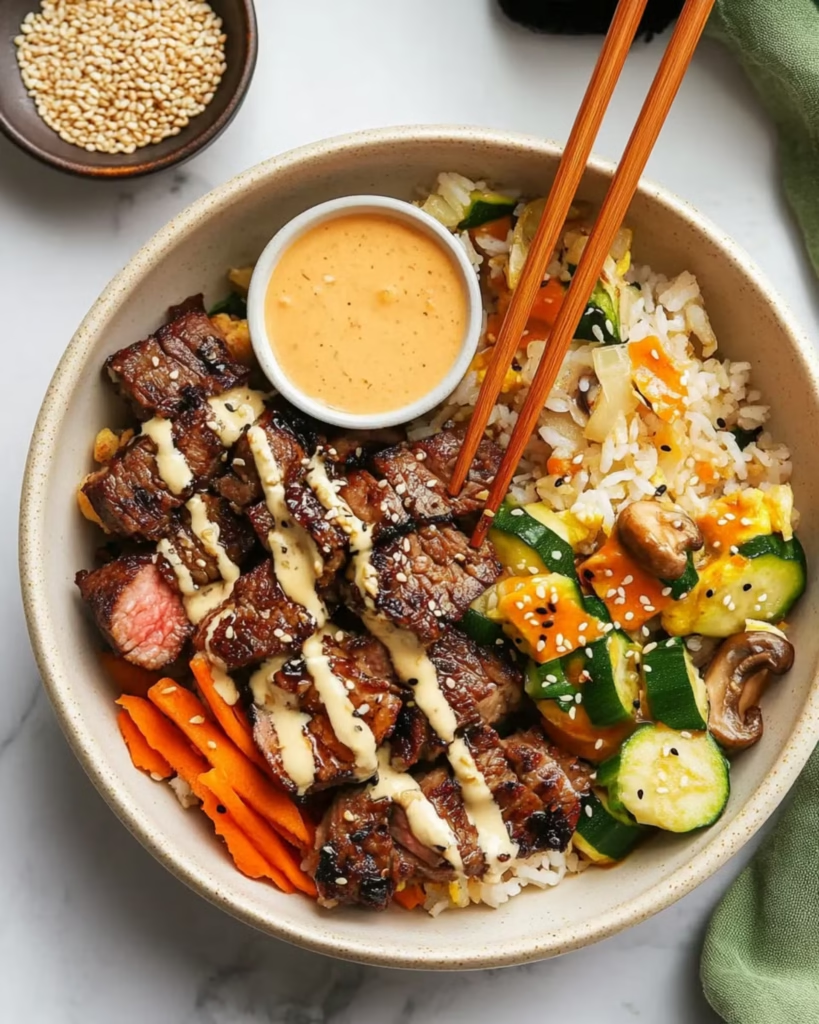
Have you ever wished you could enjoy the delicious flavors of your favorite Japanese steakhouse without leaving home? That’s exactly why I started making these Hibachi Steak Bowls. Every bite is packed with juicy steak, perfectly seasoned rice, colorful vegetables, and a rich homemade hibachi sauce that tastes just like the restaurant version. The best part is that everything comes together in one skillet, making it a fantastic meal for busy weeknights.
The first time I recreated this recipe at home, I was honestly surprised by how easy it was. I always assumed hibachi cooking required special grills or professional skills, but I quickly learned that with a hot skillet and a handful of fresh ingredients, you can achieve those same bold flavors right in your own kitchen. The aroma of sizzling garlic butter, soy sauce, and tender steak instantly filled my house and had everyone asking when dinner would be ready.
Now, these Hibachi Steak Bowls have become one of my favorite homemade dinners. They’re hearty, colorful, and incredibly satisfying while still being simple enough for beginners. Whether you’re cooking for your family, preparing lunches for the week, or looking for an impressive dinner that’s surprisingly easy, I think you’ll love this recipe as much as I do.
Today, I’m sharing everything I’ve learned over the years—from choosing the best steak to making the perfect hibachi-style sauce—so you can enjoy restaurant-quality steak bowls whenever the craving strikes.
Recipe Origin & Story
Hibachi cooking originated in Japan, where “hibachi” traditionally referred to a charcoal-heated container used for cooking and warmth. However, the hibachi-style meals many people know today became especially popular in Japanese-American steakhouses, where chefs prepare steak, chicken, shrimp, vegetables, and fried rice on large flat-top grills while entertaining guests with impressive cooking techniques.
Although most home kitchens don’t have giant teppanyaki grills, the flavors are surprisingly easy to recreate using a heavy skillet or cast-iron pan. The secret lies in cooking over high heat, using butter, garlic, soy sauce, and simple seasonings that allow each ingredient to shine.
In my own kitchen, these steak bowls started after one memorable restaurant visit. I loved everything about the meal but wanted a homemade version that was more affordable and just as delicious. After several attempts, I finally created a recipe that captures those classic hibachi flavors while fitting perfectly into everyday family dinners.
Now it’s one of those dependable recipes I make whenever I want something comforting, filling, and packed with bold flavors.
Ingredient Spotlight
- Main Star: Sirloin steak is the perfect choice for these bowls. It’s tender, flavorful, and cooks quickly over high heat while remaining juicy. Ribeye or New York strip also work beautifully if you prefer extra marbling.
- Secret Boost: A generous spoonful of garlic butter stirred into the steak during the final minute of cooking creates that rich restaurant-style flavor everyone loves.
- Quality Tips: Choose steak with bright red color and light marbling. Fresh garlic, low-sodium soy sauce, and freshly cooked jasmine rice will give you the best overall flavor and texture.
Nutritional Benefits
These Hibachi Steak Bowls provide an excellent balance of protein, carbohydrates, and vegetables. Steak is rich in protein, iron, zinc, and vitamin B12, helping support muscle growth and energy production.
The colorful vegetables contribute fiber, vitamins, and antioxidants that support overall health, while rice provides lasting energy to keep you feeling satisfied.
Because you’re making this meal at home, you can easily control the amount of butter, sodium, and oil, creating a healthier version than many restaurant meals.
Adaptable Variations
- Dietary Swaps: Replace steak with chicken, shrimp, tofu, or mushrooms for different dietary preferences. Use cauliflower rice for a lower-carb option or gluten-free tamari instead of soy sauce.
- Flavor Twists: Add sesame oil, fresh ginger, mushrooms, snap peas, broccoli, zucchini, or kimchi for even more exciting flavors.
- Seasonal Spins: During spring, add asparagus and sugar snap peas. Summer is perfect for grilled zucchini and corn. Autumn pairs beautifully with roasted mushrooms, while winter calls for hearty broccoli and carrots.
Cooking Science Explained
A few simple cooking techniques help recreate authentic hibachi flavor at home.
First, allow the steak to reach room temperature for about 20 minutes before cooking. This helps it cook more evenly while producing a beautiful golden crust.
Second, avoid overcrowding the skillet. Cooking the steak in a single layer allows moisture to evaporate quickly, creating a flavorful sear instead of steaming the meat.
Finally, always let the steak rest for about five minutes after cooking. This allows the juices to redistribute, keeping every bite tender and juicy.
Cooking the vegetables over high heat for only a few minutes also helps them stay crisp while developing wonderful caramelized edges.
Easy, Step-by-Step Recipe
Ingredients
- 1½ pounds (680 g) sirloin steak, cut into bite-sized cubes
- 2 tablespoons vegetable oil
- 2 tablespoons butter
- 4 cloves garlic, minced
- 2 tablespoons soy sauce
- 1 tablespoon Worcestershire sauce
- 1 teaspoon sesame oil (optional)
- 1 teaspoon black pepper
- ½ teaspoon salt
- 1 teaspoon garlic powder
- 1 teaspoon onion powder
- 4 cups cooked jasmine rice
- 2 cups broccoli florets
- 1 large zucchini, sliced
- 1 cup sliced carrots
- 1 small onion, sliced
- 2 green onions, sliced
- Sesame seeds for garnish
- For the Yum Yum Sauce:
- ½ cup mayonnaise
- 1 tablespoon ketchup
- 1 teaspoon rice vinegar
- 1 teaspoon sugar
- ½ teaspoon garlic powder
- 1 teaspoon paprika
- 1–2 tablespoons water to thin if needed
Instructions
- Cook the jasmine rice according to the package directions and keep warm.
- Whisk together all of the Yum Yum sauce ingredients and refrigerate until ready to serve.
- Season the steak with salt, pepper, garlic powder, and onion powder.
- Heat one tablespoon of oil in a large skillet over high heat.
- Add the steak in a single layer and cook for about 2–3 minutes per side until browned.
- Add the butter, garlic, soy sauce, Worcestershire sauce, and sesame oil during the final minute. Toss the steak until coated.
- Transfer the steak to a plate and let it rest.
- Add the remaining oil to the skillet and cook the broccoli, carrots, onion, and zucchini for about 5 minutes until crisp-tender.
- Divide the cooked rice among serving bowls.
- Top with the vegetables and steak.
- Drizzle generously with Yum Yum sauce.
- Garnish with sliced green onions and sesame seeds before serving immediately.
Practical & Valuable Tips
- Storage: Store steak, vegetables, and rice separately in airtight containers for up to four days.
- Serving Ideas: Serve with miso soup, cucumber salad, edamame, steamed dumplings, or crispy spring rolls.
- Substitutions: Ribeye, flank steak, chicken breast, shrimp, or tofu all make excellent alternatives.
- Better Searing: Make sure the skillet is very hot before adding the steak for the best caramelization.
- Fresh Rice: Day-old rice works especially well if you decide to turn this meal into hibachi fried rice.
- Extra Sauce: Double the Yum Yum sauce because everyone usually wants more.
Make-Ahead & Batch-Cooking
These Hibachi Steak Bowls are perfect for meal prep. Cook the rice, vegetables, and steak ahead of time, then portion everything into individual meal containers. Keep the Yum Yum sauce in a separate container until serving so everything stays fresh.
When reheating, warm the steak gently to avoid overcooking it. A quick minute or two in a skillet works better than prolonged microwaving and helps preserve its juicy texture.
You can also prepare the sauce up to five days in advance, allowing the flavors to develop even more while saving valuable time during the week.
Eco-Friendly Kitchen Hacks
- Use leftover rice from the previous day to reduce food waste.
- Store meal-prep portions in reusable glass containers.
- Save vegetable scraps to make homemade broth.
- Cook extra vegetables to use in tomorrow’s stir-fry or omelet.
- Prepare multiple servings at once to save cooking energy.
Pairing Suggestions
- Beverages: Iced green tea, sparkling water with lemon, ginger lemonade, Japanese soda, or a refreshing cucumber drink all pair beautifully with these steak bowls.
- Sides & Sauces: Miso soup, seaweed salad, steamed edamame, potstickers, spicy mayo, teriyaki sauce, or extra Yum Yum sauce complete the meal perfectly.
Frequently Asked Questions
-
What’s the best steak for hibachi bowls?
Sirloin is my favorite because it’s tender, affordable, and cooks quickly. Ribeye and New York strip are also excellent choices.
-
Can I use frozen vegetables?
Yes. Frozen broccoli, carrots, and mixed vegetables work well. Cook them over high heat so excess moisture evaporates quickly.
-
Can I make this recipe ahead of time?
Absolutely. It’s an excellent meal-prep recipe. Store the sauce separately until serving for the freshest flavor.
-
Can I make these bowls spicy?
Definitely. Add sriracha, chili garlic sauce, crushed red pepper flakes, or spicy mayo to increase the heat.
Call to Action
If you’ve been craving restaurant-style hibachi without the restaurant prices, I truly hope you’ll give these Hibachi Steak Bowls a try. They’re packed with bold flavors, colorful vegetables, and juicy steak that comes together surprisingly quickly in your own kitchen.
If you make this recipe, I’d love to hear how it turned out. Share your favorite vegetables, steak cuts, or homemade sauce variations in the comments. Don’t forget to save this recipe for later and share it with family and friends who love easy homemade comfort food.
Bonus: Your Kitchen Notes
One of my favorite things about these Hibachi Steak Bowls is how customizable they are. Maybe you’ll add mushrooms, switch to shrimp, make fried rice instead of steamed rice, or drizzle on extra Yum Yum sauce. Every version becomes a little different, making this recipe one you’ll enjoy again and again.
Use this section in your WordPress editor to record your favorite vegetable combinations, steak seasonings, cooking times, or homemade sauce adjustments. Before long, you’ll have your own signature hibachi bowl recipe that your family requests every week.
Great recipes become family traditions, and I hope these Hibachi Steak Bowls earn a permanent place in your dinner rotation for years to come.