Personalized Introduction
If you are looking for an easy breakfast that feels warm, comforting, and a little special, this French Toast Recipe is a perfect choice. With thick slices of bread dipped in a sweet cinnamon-vanilla egg mixture and cooked until golden brown, this classic breakfast is simple enough for a weekday morning but delicious enough for a weekend brunch.
I love making French toast because it uses basic ingredients that you probably already have in your kitchen. Bread, eggs, milk, cinnamon, vanilla, and a little butter are all you need to create something incredibly satisfying.
The outside becomes lightly crisp and golden while the inside stays soft, tender, and rich. Add maple syrup, fresh berries, powdered sugar, or a little butter on top, and you have a breakfast that everyone will want seconds of.
French toast is also one of my favorite ways to use bread that is a little past its freshest stage. Slightly stale bread actually works wonderfully because it can absorb the custard without falling apart too easily.
Whether you are cooking breakfast for your family, preparing a weekend brunch, or simply craving something sweet in the morning, this easy French toast recipe is one you will want to make again and again.
Recipe Origin & Story
French toast has a long history and is not limited to one country or one style of cooking. Versions of bread soaked in milk and eggs and then cooked have appeared in different cultures for centuries.
In France, a well-known version is called pain perdu, which translates roughly to “lost bread.” The name reflects the traditional idea of giving older bread a second life rather than throwing it away.
Over time, French toast became a popular breakfast dish in many parts of the world. Recipes vary from simple cinnamon versions to rich custard-style preparations served with fruit, cream, nuts, or sweet sauces.
The recipe I am sharing here keeps things classic and easy. It has a lightly sweetened egg custard flavored with cinnamon and vanilla, thick bread slices, and plenty of butter for cooking.
The result is golden, tender French toast with crisp edges and a deliciously warm cinnamon aroma.
Ingredient Spotlight
- Thick-Cut Bread: Brioche, challah, Texas toast, or sturdy white bread works beautifully.
- Eggs: Create the rich custard that coats and sets around the bread.
- Milk: Adds moisture and creates a creamy texture.
- Vanilla Extract: Gives the French toast a warm, sweet aroma.
- Cinnamon: Adds classic breakfast spice and warmth.
- Sugar: Provides gentle sweetness in the custard.
- Butter: Helps the bread brown beautifully in the skillet.
- Salt: A small pinch balances the sweetness.
- Maple Syrup: The classic finishing touch.
Bread: The bread is one of the most important parts of French toast. Thick slices work especially well because they can absorb the custard while keeping their structure.
Brioche and challah are excellent choices because they are rich and tender. If you are using regular sandwich bread, choose slices that are thick and sturdy enough to soak without becoming mushy.
Milk: Whole milk creates a rich custard, but 2% milk can also be used. For an extra indulgent version, replace some of the milk with heavy cream.
Cinnamon and vanilla: These two ingredients give the French toast its familiar sweet and comforting flavor. Freshly ground cinnamon can make the flavor even more noticeable.
Nutritional Benefits
French toast is a satisfying breakfast that provides carbohydrates from the bread and protein from the eggs and milk.
Because traditional French toast is cooked with butter and often served with syrup, it is best enjoyed as part of a balanced breakfast rather than as an everyday health-focused meal.
You can make the meal more balanced by serving French toast with fresh fruit such as strawberries, blueberries, raspberries, bananas, or oranges.
For extra protein, serve it with Greek yogurt or eggs on the side.
You can also reduce the added sugar in the custard if you plan to use plenty of maple syrup or another sweet topping.
Adaptable Variations
- Classic Cinnamon: Add a little extra cinnamon for a warmer flavor.
- Berry French Toast: Top with fresh strawberries, blueberries, or raspberries.
- Banana French Toast: Add sliced bananas and maple syrup.
- Stuffed French Toast: Sandwich cream cheese, Nutella, or peanut butter between two slices.
- Vanilla French Toast: Increase the vanilla for a stronger sweet aroma.
- Orange French Toast: Add a little orange zest to the custard.
- Chocolate French Toast: Add cocoa powder to the egg mixture.
- Apple Cinnamon: Serve with warm sautéed apples and extra cinnamon.
- French Toast Casserole: Cut the bread into pieces and bake everything together in a casserole dish.
You can also change the toppings depending on the season. Fresh berries are wonderful in summer, while warm apples, pears, and cinnamon are perfect for cooler months.
Cooking Science Explained
Why does slightly stale bread work well? Older bread has less moisture than fresh bread, so it can absorb more of the egg mixture without immediately becoming too soft.
Why use thick slices? Thick bread creates a soft, custardy center while allowing the outside to become golden and lightly crisp.
Why add eggs? Eggs provide the structure for the custard. When heated, the proteins in the eggs set and transform the liquid mixture into the tender coating around the bread.
Why cook over medium heat? Medium heat allows the bread to brown gradually while giving the inside enough time to warm and cook. If the pan is too hot, the outside can burn before the center is properly heated.
Why use butter? Butter adds flavor and helps the surface of the bread develop a beautiful golden-brown crust.
Easy, Step-by-Step Recipe
Ingredients
- 8 slices thick-cut bread
- 4 large eggs
- 1 cup whole milk
- 2 tablespoons granulated sugar
- 2 teaspoons vanilla extract
- 1 teaspoon ground cinnamon
- 1/4 teaspoon salt
- 3 tablespoons butter, divided
- Maple syrup, for serving
- Powdered sugar, optional
- Fresh berries, optional
- Sliced bananas, optional
Instructions
- Prepare the custard: In a wide shallow bowl, whisk together the eggs, milk, sugar, vanilla extract, cinnamon, and salt.
- Heat the skillet: Place a large nonstick skillet or griddle over medium heat.
- Add butter: Add about 1 tablespoon of butter to the skillet and allow it to melt.
- Dip the bread: Place one slice of bread into the egg mixture. Let it soak for several seconds, then turn it over and coat the other side.
- Do not oversoak: The bread should be saturated but still sturdy enough to lift without falling apart.
- Place in skillet: Transfer the soaked bread to the hot skillet.
- Cook the first side: Cook for approximately 2–4 minutes, or until the bottom is golden brown.
- Flip: Carefully turn the bread over with a spatula.
- Cook the second side: Continue cooking for another 2–4 minutes until golden and cooked through.
- Repeat: Add more butter as needed and continue with the remaining bread slices.
- Keep warm: Place cooked French toast on a plate or baking sheet while finishing the remaining slices.
- Serve: Place the French toast on plates and top with maple syrup, powdered sugar, fresh berries, or sliced bananas.
- Enjoy immediately: French toast is best served warm while the edges are crisp and the center is soft.
Practical & Valuable Tips
- Use thick bread: Thin bread can become too soft during soaking.
- Use slightly stale bread: It absorbs the custard beautifully.
- Do not soak too long: Especially if using soft sandwich bread.
- Whisk the custard well: Make sure the cinnamon and sugar are evenly distributed.
- Use medium heat: This helps prevent burnt bread.
- Cook in batches: Avoid overcrowding the skillet.
- Add fresh butter: A little butter between batches keeps the bread flavorful.
- Serve right away: Fresh French toast has the best texture.
If you notice that the bread is browning too quickly, lower the heat. You want a deep golden color rather than a dark, burnt crust.
If your French toast is soggy in the center, the slices may have been too thin or soaked for too long. Thick bread and a moderate soaking time usually solve this problem.
For especially thick slices of brioche or challah, you can let them soak a little longer because they are sturdy enough to hold more custard.
Make-Ahead & Batch-Cooking
French toast is best when freshly cooked, but it can be prepared ahead when you are serving a larger group.
Cook the slices as usual and place them in a single layer on a baking sheet. Keep them warm in a low oven while you finish cooking the rest.
You can also refrigerate leftover French toast in an airtight container. Reheat it in a toaster, toaster oven, skillet, or oven to help restore the crisp edges.
For larger breakfasts, prepare the custard in advance and keep it refrigerated until you are ready to cook. Whisk it again before dipping the bread.
French toast can also be frozen. Allow the cooked slices to cool completely, then place parchment paper between them before freezing in a freezer-safe container.
Reheat frozen slices in a toaster or oven until warmed through.
Eco-Friendly Kitchen Hacks
- Use day-old bread instead of throwing it away.
- Turn extra fruit into a French toast topping.
- Use leftover bread ends for French toast.
- Freeze extra cooked French toast for another breakfast.
- Store leftovers in reusable containers.
French toast is one of the easiest recipes for reducing food waste because bread that is slightly dry or stale can become the star of the meal.
Instead of throwing away bread that is no longer perfect for sandwiches, slice it up and turn it into a delicious breakfast.
Pairing Suggestions
- Classic: Maple syrup and butter.
- Fresh: Strawberries, blueberries, raspberries, and bananas.
- Creamy: Greek yogurt or whipped cream.
- Crunchy: Toasted pecans or walnuts.
- Sweet: Powdered sugar, honey, or chocolate-hazelnut spread.
- Savory Side: Crispy bacon, breakfast sausage, or scrambled eggs.
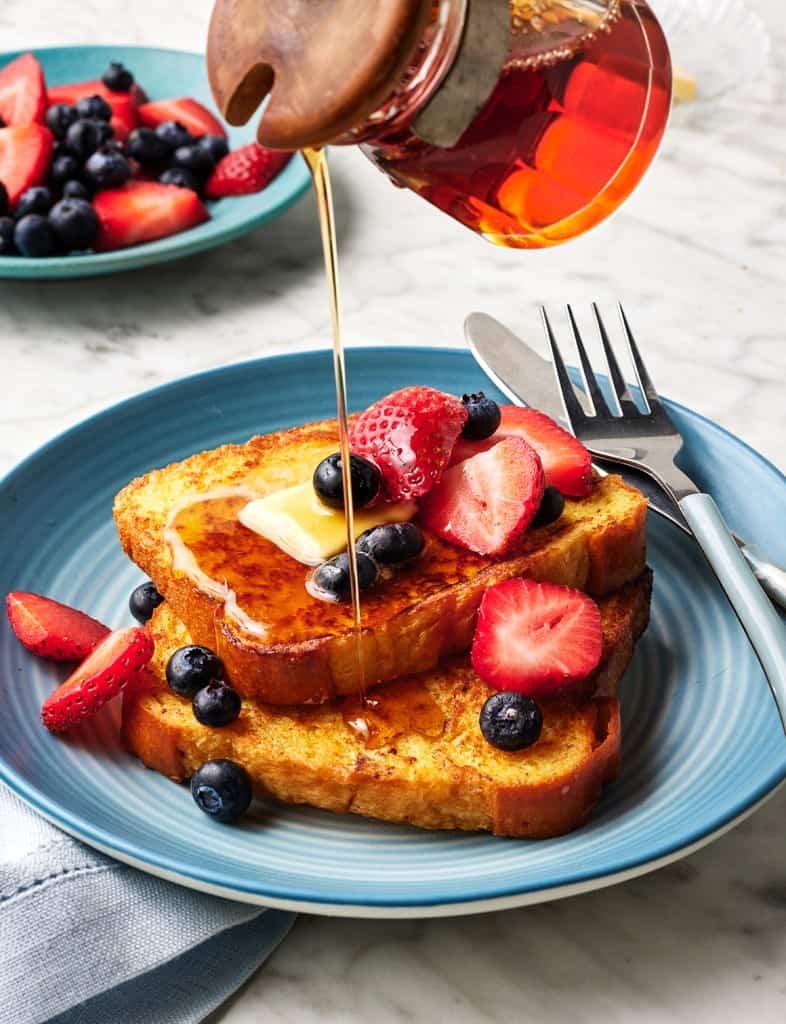
For a classic breakfast plate, serve two slices of French toast with maple syrup, fresh berries, and a little butter.
If you want something more filling, add crispy bacon or breakfast sausage on the side.
For a dessert-style breakfast, top the French toast with sliced bananas, Nutella, whipped cream, and a light dusting of powdered sugar.
Frequently Asked Questions
- What bread is best for French toast?
Brioche, challah, thick-cut white bread, and Texas toast are excellent choices. Slightly stale bread is especially useful. - Can I use regular sandwich bread?
Yes. Use sturdy slices and avoid soaking them for too long. - Why is my French toast soggy?
The bread may have absorbed too much custard or the heat may have been too low. Thick bread and moderate soaking help prevent sogginess. - Can I make French toast without vanilla?
Yes. Vanilla adds flavor but is not essential. - Can I make it without cinnamon?
Absolutely. You can leave it out or replace it with nutmeg, pumpkin spice, or another warm spice. - Can I use almond milk?
Yes. Unsweetened almond milk can be substituted for regular milk. - Can I make French toast ahead?
Yes. Cooked French toast can be kept warm or refrigerated and reheated later. - Can French toast be frozen?
Yes. Cool the cooked slices completely, separate them with parchment paper, and freeze in an airtight container. - What toppings are best?
Maple syrup, powdered sugar, berries, bananas, whipped cream, nuts, honey, and chocolate-hazelnut spread are all delicious. - How do I make crispy French toast?
Use sturdy bread, avoid oversoaking, and cook the slices in butter over medium heat until deeply golden.
Call to Action
If you want an easy breakfast that feels homemade, comforting, and delicious, this French Toast Recipe is a wonderful choice.
It takes just a few simple ingredients to create golden slices of bread with crisp edges, a soft center, and plenty of warm cinnamon-vanilla flavor.
Serve it with maple syrup and fresh berries for a classic breakfast, or get creative with bananas, Nutella, whipped cream, nuts, or your favorite toppings.
Grab some bread, whisk together your custard, heat up your skillet, and make this delicious French toast for your next breakfast!
Bonus: Your Kitchen Notes
If you want the best possible French toast, pay special attention to the bread. Thick, sturdy slices are much easier to work with than thin, soft bread.
I also recommend cooking your French toast over medium heat. This gives the bread enough time to become beautifully golden while allowing the center to cook without burning the outside.
Do not worry if the bread looks slightly soft when you first place it in the skillet. As it cooks, the egg mixture sets and creates the tender texture that makes French toast so delicious.
For a beautiful presentation, stack two or three slices on a plate, add a small pat of butter, drizzle generously with maple syrup, and scatter fresh berries over the top.
A light dusting of powdered sugar makes the finished breakfast look extra special with almost no effort.
If you are cooking for children, let everyone choose their own toppings. Set out berries, bananas, syrup, powdered sugar, whipped cream, chopped nuts, and chocolate-hazelnut spread so everyone can create their favorite combination.
Golden, buttery, soft in the center, and filled with warm cinnamon and vanilla flavor, this easy French Toast Recipe is a classic breakfast that never goes out of style.