Personalized Introduction
Is there anything better than waking up to the smell of warm cinnamon rolls baking in the oven? I honestly don’t think so. That combination of buttery dough, cinnamon sugar, and sweet vanilla icing makes the whole kitchen smell like a bakery, and suddenly an ordinary morning feels like a special occasion.
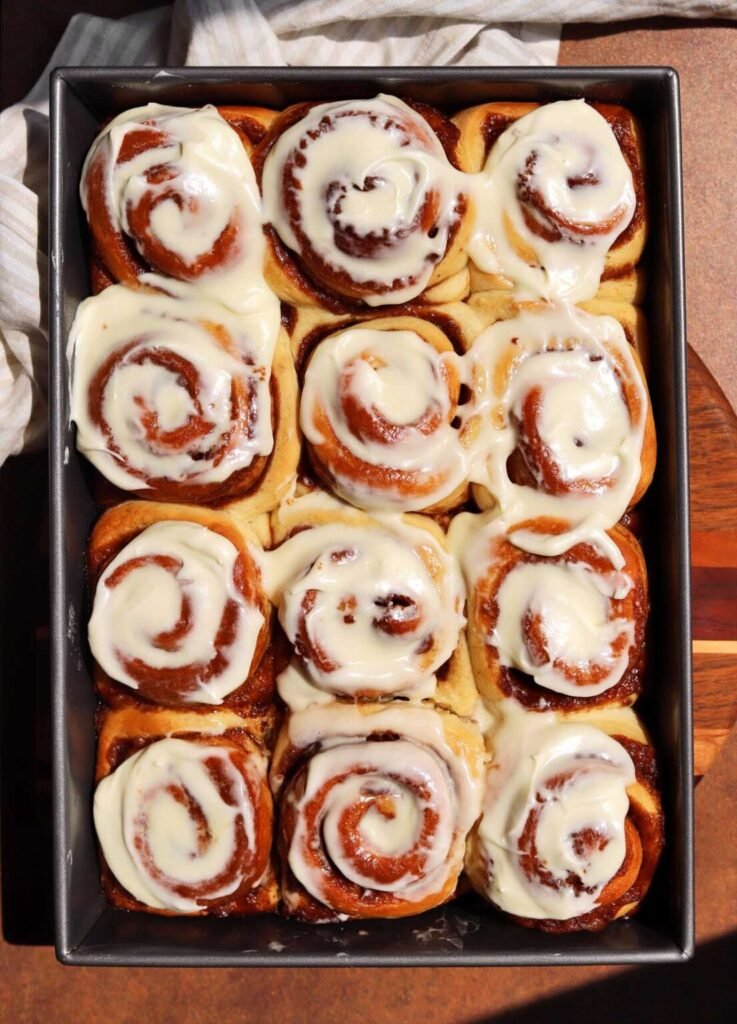
These Classic Fluffy Cinnamon Rolls are exactly the kind of recipe I love making when I want something comforting and homemade. The rolls are soft, tender, and wonderfully fluffy, with a buttery cinnamon-sugar center that becomes slightly gooey as it bakes. Finish them with a creamy glaze while they are still warm, and you have a breakfast that is almost impossible to resist.
The secret to really good cinnamon rolls is not simply adding more cinnamon or sugar. It is all about the dough. You want a dough that is soft and elastic without being overloaded with flour. You also need to give the yeast enough time to work so the rolls become light and airy rather than heavy.
Classic cinnamon roll recipes commonly use an enriched yeast dough, cinnamon-sugar filling, and a sweet glaze or cream cheese icing. A traditional Food Network version, for example, makes 12 rolls and uses milk, yeast, butter, flour, sugar, cinnamon, and a simple vanilla glaze. :contentReference[oaicite:0]{index=0}
So grab your mixing bowl, warm up the kitchen, and let’s make a pan of cinnamon rolls that you will be proud to put on the breakfast table.
Recipe Origin & Story
Cinnamon rolls have a long history across Northern Europe and North America, with many families developing their own favorite versions. Some are lightly sweetened, some are heavily frosted, and others are packed with so much cinnamon filling that it becomes wonderfully gooey in the center.
What I love about homemade cinnamon rolls is that they feel personal. Maybe you remember someone in your family making them on weekends. Maybe your first experience with them was at a bakery. Or perhaps you simply love the smell of cinnamon and butter drifting through the house.
The classic technique is beautifully simple: make a soft yeast dough, allow it to rise, roll it into a rectangle, spread it with butter, cover it with cinnamon sugar, roll it into a log, slice it, let the rolls rise again, and bake.
Modern recipes also offer clever tricks for keeping cinnamon rolls soft. For example, tangzhong—a cooked flour-and-liquid starter—can help yeast rolls remain moist and fluffy for several days. :contentReference[oaicite:1]{index=1}
But today, we’re keeping things approachable. You do not need complicated techniques to make wonderfully fluffy cinnamon rolls at home.
Ingredient Spotlight
- Main Star: The yeast dough is the foundation of these cinnamon rolls. Warm milk, butter, eggs, sugar, and flour create a tender enriched dough that rises into soft, fluffy rolls.
- Secret Boost: Brown sugar in the filling gives the cinnamon layer a deeper caramel-like flavor. A pinch of salt also helps keep the filling from tasting one-dimensionally sweet.
- Quality Tips: Use fresh yeast, real butter, fresh cinnamon, and good-quality vanilla. Your ingredients do not need to be expensive, but freshness makes a noticeable difference.
Whole milk is especially nice because it gives the dough richness and tenderness. If you only have lower-fat milk, you can still make delicious rolls, but whole milk gives you that bakery-style softness.
For the cinnamon, use a spice that still smells fragrant when you open the container. If your cinnamon has been sitting in the cupboard for years and barely smells like anything, it is time for a fresh jar.
Nutritional Benefits
Let’s be honest—these cinnamon rolls are a delicious treat rather than a health-focused breakfast. They contain butter, sugar, flour, and a sweet topping, so they are best enjoyed as part of a balanced diet.
Eggs and milk provide protein, while milk contributes calcium and other nutrients. The flour provides carbohydrates that supply energy, making a cinnamon roll a satisfying breakfast or snack when enjoyed in moderation.
If you want to balance your breakfast, serve one cinnamon roll with fresh berries, sliced fruit, Greek yogurt, or a handful of nuts. The fruit adds freshness and fiber while the yogurt adds extra protein.
Adaptable Variations
- Dietary Swaps: Use a dairy-free butter and plant-based milk for a dairy-free version. A tested gluten-free flour blend designed for yeast baking can be used for a gluten-free variation, although the texture will be different.
- Flavor Twists: Add chopped pecans, walnuts, raisins, chocolate chips, orange zest, cardamom, or a little maple syrup to the filling.
- Seasonal Spins: Add pumpkin spice and pecans in autumn, orange zest and cranberries during the holidays, or fresh berries during spring and summer.
For chocolate lovers, sprinkle mini chocolate chips over the cinnamon filling before rolling the dough. The chocolate melts into the cinnamon sugar and creates little pockets of richness.
If you love nuts, toasted pecans are one of my favorite additions. Their buttery crunch works beautifully with the soft dough and caramelized brown sugar.
You can also make orange cinnamon rolls by adding finely grated orange zest to the filling and replacing some of the vanilla icing with a simple orange glaze.
Cooking Science Explained
Why does yeast need warm liquid? Yeast works best in a comfortably warm environment. Liquid that is too cold can slow the yeast down, while liquid that is too hot can damage or kill it. Aim for warm rather than hot milk.
Why does the dough need to rise twice? The first rise gives the yeast time to produce gas and develop the dough. After shaping, the second rise allows the individual rolls to become light and puffy before baking. Traditional cinnamon roll recipes commonly allow the shaped rolls to rise until doubled before they go into the oven. :contentReference[oaicite:2]{index=2}
Why should you avoid adding too much flour? Extra flour can make the dough stiff and the finished rolls heavy. A good cinnamon roll dough should feel soft and slightly tacky rather than dry and firm.
Why does warm cream or milk help? Some cinnamon roll methods pour a small amount of cream or half-and-half over the rolls before baking. This can help create a softer, richer center. :contentReference[oaicite:3]{index=3}
Easy, Step-by-Step Recipe
Ingredients
- 1 cup (240 ml) whole milk, warm
- 2 1/4 teaspoons active dry yeast
- 1/4 cup (50 g) granulated sugar
- 1/2 cup (113 g) unsalted butter, melted and slightly cooled
- 1 large egg
- 1 teaspoon vanilla extract
- 4 cups (500 g) all-purpose flour, plus a little more if needed
- 1 teaspoon salt
For the filling:
- 1/2 cup (113 g) unsalted butter, very soft
- 3/4 cup (150 g) packed brown sugar
- 2 tablespoons ground cinnamon
- 1/4 teaspoon salt
For the cream cheese frosting:
- 4 ounces (113 g) cream cheese, softened
- 1/4 cup (57 g) unsalted butter, softened
- 1 cup (120 g) powdered sugar
- 1 teaspoon vanilla extract
- 1–2 tablespoons milk or heavy cream, as needed
This ingredient structure follows the familiar classic cinnamon-roll method of an enriched yeast dough, buttery cinnamon filling, and sweet cream cheese topping. :contentReference[oaicite:4]{index=4}
Instructions
- Warm the milk: Gently warm the milk until it feels comfortably warm, around 105–110°F (40–43°C). It should never be hot.
- Activate the yeast: Pour the warm milk into a large bowl. Stir in the granulated sugar and yeast. Let the mixture sit for about 5–10 minutes, until it becomes slightly foamy.
- Add the wet ingredients: Whisk in the melted butter, egg, and vanilla extract.
- Add the flour: Add about 3 1/2 cups of flour and the salt. Stir until a soft dough begins to form. Add the remaining flour gradually, only as needed.
- Knead: Transfer the dough to a lightly floured surface and knead for about 6–8 minutes, until smooth, elastic, and slightly tacky.
- First rise: Place the dough in a lightly greased bowl. Cover it and let it rise in a warm, draft-free place for about 60–90 minutes, or until noticeably puffy and roughly doubled in size.
- Prepare the filling: Mix the brown sugar, cinnamon, and salt in a small bowl.
- Roll the dough: Gently deflate the risen dough and roll it into approximately a 10-by-18-inch rectangle on a lightly floured surface.
- Add the butter: Spread the softened butter evenly over the dough, leaving a small border around the edges.
- Add cinnamon sugar: Sprinkle the brown sugar and cinnamon mixture evenly over the butter. Press it gently into the surface so it stays in place.
- Roll into a log: Starting from one long side, tightly roll the dough into a log. Pinch the seam gently to seal it.
- Slice: Cut the log into 12 evenly sized pieces. Unflavored dental floss is an excellent way to cut the rolls without crushing the soft dough.
- Arrange: Place the rolls cut-side up in a greased 9-by-13-inch baking dish. Leave a little space between them.
- Second rise: Cover the pan and let the rolls rise for approximately 45–60 minutes, until they look puffy and have expanded toward one another.
- Preheat: Heat your oven to 350°F (175°C).
- Bake: Bake the cinnamon rolls for approximately 25–30 minutes, until golden brown and cooked through. Avoid overbaking because this can make the rolls dry.
- Cool briefly: Allow the rolls to cool in the pan for about 10–15 minutes.
- Make the frosting: Beat the softened cream cheese and butter until smooth. Add the powdered sugar and vanilla. Beat again, adding milk or cream a little at a time until the frosting reaches a smooth, spreadable consistency.
- Frost: Spread the cream cheese frosting over the warm cinnamon rolls. Let it melt slightly into the swirls.
- Serve: Serve warm and enjoy while the centers are soft, gooey, and fragrant.
Classic recipes generally bake cinnamon rolls at around 350°F and allow approximately 25–30 minutes, although exact timing depends on the oven and size of the rolls. :contentReference[oaicite:5]{index=5}
Practical & Valuable Tips
- Storage: Store cooled frosted cinnamon rolls in an airtight container in the refrigerator because of the cream cheese frosting. Reheat individual rolls gently before serving.
- Serving Ideas: Serve warm with coffee, tea, fresh fruit, berries, or a glass of cold milk.
- Substitutions: Whole milk can be replaced with another milk of your choice. Pecans, walnuts, raisins, or chocolate chips can be added to the filling.
The most important tip I can give you is not to keep adding flour simply because the dough feels sticky. Cinnamon roll dough should be soft. If you add too much flour, you can turn wonderfully fluffy rolls into dense ones.
Another helpful trick is to make sure your ingredients are not ice-cold. Room-temperature eggs and properly warmed milk help the dough come together smoothly and encourage good yeast activity.
If your kitchen is cold, your dough may take longer to rise. Do not rely only on the clock. Look at the dough. You want it to become visibly puffy and approximately double in size.
When cutting the rolls, a sharp serrated knife or unflavored dental floss works much better than pressing down with a blunt knife. You want to slice through the log rather than squash it.
Finally, do not drown the rolls in frosting before they have had a few minutes to cool. Warm rolls are perfect for frosting, but if they are absolutely piping hot, the frosting can melt too quickly.
Make-Ahead & Batch-Cooking
Cinnamon rolls are one of my favorite make-ahead breakfast recipes because most of the work can be done the night before.
Prepare the dough, allow it to rise, roll and fill it, then slice and arrange the rolls in the baking dish. Cover the pan tightly and refrigerate overnight. In the morning, let the rolls come toward room temperature and become puffy before baking.
This overnight method is especially useful for weekends and holidays. You can do the messy flour-and-dough work the evening before, then simply bake the rolls in the morning.
Some classic cinnamon roll recipes specifically offer overnight refrigeration after shaping, followed by a room-temperature rise before baking. :contentReference[oaicite:6]{index=6}
Already-baked cinnamon rolls can also be frozen. Cool them completely before wrapping and freezing. When you are ready to enjoy them, thaw and warm them gently before adding fresh icing. Food Network’s classic recipe notes that baked rolls can be frozen for up to two weeks. :contentReference[oaicite:7]{index=7}
If you are feeding a crowd, make two pans rather than making one extremely deep pan. This helps the rolls bake more evenly and gives everyone a beautifully golden top.
Eco-Friendly Kitchen Hacks
- Use reusable silicone baking mats or reusable containers whenever possible.
- Save small amounts of leftover cinnamon sugar for oatmeal, toast, pancakes, or baked apples.
- Freeze extra cinnamon rolls instead of letting them go stale.
- Use leftover frosting on muffins, pancakes, or fruit rather than throwing it away.
- Plan an overnight batch so you can bake efficiently without repeatedly heating the oven.
- Use the entire orange or lemon if adding zest by saving the remaining juice for drinks or dressings.
Pairing Suggestions
- Beverages: Fresh coffee, cappuccino, latte, black tea, chai, hot chocolate, or cold milk.
- Sides & Sauces: Fresh berries, sliced apples, strawberries, yogurt, maple syrup, extra cream cheese frosting, or a light caramel drizzle.
For a cozy weekend breakfast, I love serving one warm cinnamon roll with fresh berries and a strong cup of coffee. The berries provide a fresh contrast to the rich buttery roll, while the coffee balances the sweetness.
For a holiday brunch, arrange the rolls on a large platter and scatter fresh berries around them. A little dusting of powdered sugar can make the presentation feel extra special.
Frequently Asked Questions
- Why didn’t my cinnamon rolls become fluffy?
The most common reasons are inactive yeast, too much flour, insufficient rising time, or overbaking. Make sure your yeast is fresh and allow the dough to become visibly puffy before moving to the next step. - Can I prepare cinnamon rolls the night before?
Yes. Shape the rolls, arrange them in the baking dish, cover them, and refrigerate overnight. Allow them time to warm and rise before baking. This is a popular make-ahead method for classic cinnamon rolls. :contentReference[oaicite:8]{index=8} - How do I keep cinnamon rolls soft?
Avoid adding too much flour and avoid overbaking. Keeping the rolls covered after baking also helps prevent them from drying out. Tangzhong is another technique that can produce particularly soft rolls that stay moist for several days. :contentReference[oaicite:9]{index=9} - Can I freeze homemade cinnamon rolls?
Yes. You can freeze baked cinnamon rolls once they have cooled completely. Thaw them and warm them gently before serving. :contentReference[oaicite:10]{index=10}
Call to Action
If you have never made cinnamon rolls from scratch before, I hope this recipe gives you the confidence to try. Yes, there is some waiting involved while the dough rises, but the actual process is much easier than it might seem.
And trust me, there is something incredibly satisfying about pulling a pan of homemade cinnamon rolls from the oven. The tops are golden, the centers are soft, the cinnamon filling is bubbling between the layers, and the frosting slowly melts over everything.
Make them for a lazy Sunday breakfast, Christmas morning, a birthday brunch, Mother’s Day, a family gathering, or simply because you want your home to smell amazing.
Once you make them, share them with someone you love. Save the recipe for your next brunch, and don’t be afraid to experiment with fillings and toppings until you create your perfect cinnamon roll.
Bonus: Your Kitchen Notes
This is one of those recipes where keeping a few notes after your first attempt can make your second batch even better.
Your kitchen note: Write down how long your dough needed to rise in your kitchen. Rising time can vary considerably depending on room temperature, yeast activity, and the temperature of your ingredients.
If your rolls came out too dense, ask yourself whether you added too much flour. If they were dry, check whether they stayed in the oven too long. If they did not rise enough, check your yeast and make sure your kitchen was warm enough.
For extra gooey cinnamon rolls, spread the filling generously but leave a small border around the edges so it does not spill out excessively while rolling.
If you want a stronger cinnamon flavor, increase the cinnamon slightly. If you prefer a sweeter filling, add a little more brown sugar. Toasted pecans are fantastic if you want crunch, while raisins give the rolls a classic bakery-style feel.
You can also make mini cinnamon rolls by dividing the log into smaller pieces. These are perfect for brunch buffets, baby showers, parties, and holiday breakfasts because guests can enjoy a small roll without committing to a huge one.
For an extra-soft finish, you can brush the warm rolls with a little melted butter immediately after they come out of the oven. Then add your cream cheese frosting after they have cooled slightly.
And if you are making these for a special occasion, don’t underestimate presentation. A simple white platter, a few fresh berries, and a generous drizzle of cream cheese frosting can make homemade cinnamon rolls look like something straight from a bakery.
Most importantly, enjoy the process. Let the dough rise, roll it gently, fill it generously, and give those beautiful spirals enough time to become soft and puffy before baking.
When the timer goes off, open the oven and let that cinnamon-butter aroma fill your kitchen. Give the rolls a few minutes to cool, spread them with creamy frosting, and pull one apart while it is still warm.
That first bite is the reward: soft, fluffy dough, buttery cinnamon sugar, sweet vanilla, and just enough cream cheese tang to bring everything together.
Homemade Classic Fluffy Cinnamon Rolls are more than just breakfast. They are the kind of recipe that turns an ordinary morning into a memory. And once you have made them successfully, you may find yourself looking for excuses to bake another pan.