Personalized Introduction
There are some chicken dinners that are simply impossible to resist, and Crispy Parmesan Chicken is one of them. If you love that satisfying crunch of a golden coating followed by juicy, tender chicken, I think you are going to have a lot of fun making this recipe.
I especially love this kind of dinner because it feels a little fancy while still being incredibly easy to prepare. You start with simple chicken breasts, season them well, coat them in Parmesan and crispy breadcrumbs, and cook them until the outside becomes beautifully golden. The result is a dinner that looks impressive but does not require complicated cooking skills.
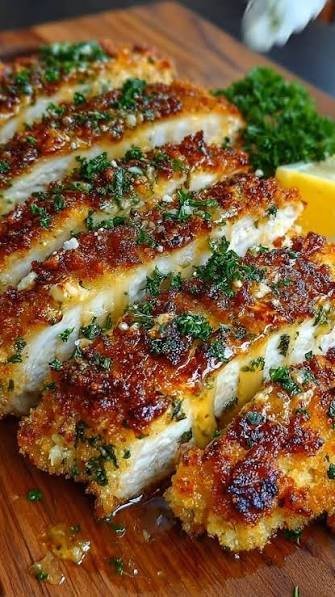
And can we talk about the Parmesan crust? That is my favorite part. The cheese adds a salty, nutty flavor while helping the coating become wonderfully crisp. When you cut into the chicken and hear that little crunch, you know dinner is going to be good.
This is also one of those recipes that works for almost any occasion. Make it for a quick family dinner, serve it with pasta for a cozy weekend meal, or pair it with a simple salad when you want something lighter. You can even slice the cooked chicken and use it in sandwiches, wraps, or salads the next day.
If you have chicken breasts sitting in your refrigerator right now, grab them. I am going to show you how to turn them into a golden, crispy, Parmesan-packed dinner that your whole family will want again.
Recipe Origin & Story
Parmesan-crusted chicken is inspired by the classic idea of coating meat with breadcrumbs and cheese before cooking. It has become a favorite in home kitchens because it combines a familiar ingredient—chicken—with a crunchy coating that adds plenty of flavor and texture.
The technique is wonderfully adaptable. You can pan-fry the chicken for an especially golden crust, bake it for a lighter preparation, or use an air fryer when you want crisp results with less oil.
What makes this recipe feel special to me is that it has that classic comfort-food quality without requiring a long list of ingredients. Chicken, Parmesan, breadcrumbs, herbs, garlic, and a few pantry staples are enough to create something delicious.
I also love recipes like this because they are easy to make your own. Maybe you like extra garlic. Maybe you want more Parmesan. Perhaps you want a little heat from red pepper flakes. You can adjust the coating to match your mood.
That is the beauty of a good homemade chicken recipe. Once you understand the basic method, you can confidently change the flavors without losing the crispy texture that makes the dish so good.
Ingredient Spotlight
- Main Star: Boneless, skinless chicken breasts provide a lean, tender base for the crispy Parmesan coating. Chicken cutlets are especially useful because their thinner shape cooks quickly and evenly.
- Secret Boost: Freshly grated Parmesan adds a deeper, nuttier flavor and helps create those delicious golden bits throughout the crust.
- Quality Tips: Choose chicken pieces that are similar in thickness so they cook evenly. For the Parmesan, freshly grated cheese generally melts and browns better than very fine pre-grated cheese.
Chicken: If your chicken breasts are very thick, slice them horizontally into cutlets or gently pound them to an even thickness. This is one of the easiest ways to prevent the outside from becoming overcooked while the center finishes cooking.
Parmesan: Parmesan is the flavor hero of the coating. Its salty, savory taste pairs beautifully with garlic and herbs. I like using freshly grated Parmesan because the texture works wonderfully in the breadcrumb mixture.
Breadcrumbs: Panko breadcrumbs are my favorite choice when maximum crunch is the goal. Regular breadcrumbs can also be used for a finer, more traditional crust.
Garlic: Garlic powder distributes evenly throughout the coating, while fresh minced garlic can add stronger flavor if you want something more intense.
Seasonings: Italian seasoning, paprika, black pepper, and a little salt give the crust extra personality without overpowering the Parmesan.
Nutritional Benefits
Chicken is an excellent source of protein, which makes this dish filling and satisfying. Parmesan also contributes protein and calcium, while the herbs and seasonings add plenty of flavor without requiring large amounts of sauce.
If you want to make your meal more balanced, serve the crispy chicken with a generous portion of vegetables. Roasted broccoli, green beans, asparagus, or a fresh salad all work beautifully.
You can also pair it with a lighter side such as steamed vegetables or a tomato and cucumber salad rather than heavier pasta or potatoes.
Of course, the overall nutritional profile depends on the amount of Parmesan, breadcrumbs, oil, and serving size, so think of the recipe as one part of a balanced meal.
Adaptable Variations
- Dietary Swaps: Use gluten-free panko or breadcrumbs for a gluten-free version. For a lower-carb option, replace some or all of the breadcrumbs with finely crushed pork rinds or almond flour.
- Flavor Twists: Add lemon zest, smoked paprika, Italian herbs, fresh parsley, red pepper flakes, or extra garlic to the Parmesan coating.
- Seasonal Spins: Serve with fresh tomato salad during summer, roasted root vegetables in autumn, sautéed greens during winter, or asparagus and peas in spring.
For a lemon Parmesan chicken, add finely grated lemon zest to the coating and squeeze fresh lemon juice over the chicken immediately before serving.
For a spicy Parmesan chicken, add crushed red pepper flakes and a pinch of cayenne pepper. You can even serve it with a little spicy marinara sauce.
For a garlic-herb version, increase the garlic powder and add dried parsley, oregano, basil, and thyme.
For an extra-cheesy crust, increase the Parmesan slightly and mix in a little shredded mozzarella or Romano cheese.
You can also change the cooking method. Pan-frying creates an especially rich, golden crust, while oven baking or air frying can give you a lighter option with less oil.
Cooking Science Explained
Why flatten the chicken? Even thickness is the key to even cooking. A thick end can take much longer to cook than a thin end, which means the thinner section may become dry before the thickest part is ready.
Why use panko? Panko breadcrumbs have a light, flaky texture that creates more surface area and can produce an especially crisp coating.
Why let the coating stick before cooking? After breading the chicken, giving it a few minutes to sit allows the coating to adhere better. This helps reduce the chance of the crust sliding off when you turn the chicken.
Why avoid moving the chicken too much? A crust needs time to brown and set. Constantly flipping or shifting the chicken can disturb the coating before it has a chance to become crisp.
And here is my favorite rule: do not rely only on the color of the chicken to decide when it is finished. Use a food thermometer and check the thickest part of the chicken. Poultry should reach a safe internal temperature of 165°F (74°C).
Easy, Step-by-Step Recipe
Ingredients
- 4 boneless, skinless chicken breasts
- 1/2 cup all-purpose flour
- 2 large eggs
- 1 tablespoon milk
- 1 cup panko breadcrumbs
- 3/4 cup freshly grated Parmesan cheese
- 1 teaspoon garlic powder
- 1 teaspoon Italian seasoning
- 1/2 teaspoon paprika
- 1/2 teaspoon salt
- 1/4 teaspoon black pepper
- 1/4 teaspoon red pepper flakes, optional
- 3 tablespoons olive oil or neutral cooking oil, plus more as needed
- 2 tablespoons chopped fresh parsley
- 1 lemon, cut into wedges, for serving
Instructions
- Prepare the chicken: Pat the chicken breasts dry with paper towels. If they are very thick, slice them horizontally into thinner cutlets or gently pound them to an even thickness.
- Season the chicken: Lightly season both sides with a small amount of salt and black pepper. Remember that Parmesan is already salty, so you do not need a lot of additional salt.
- Prepare the flour: Place the flour in a shallow bowl or plate.
- Prepare the egg mixture: Whisk the eggs and milk together in a second shallow bowl until smooth.
- Make the Parmesan coating: In a third bowl, combine the panko breadcrumbs, Parmesan, garlic powder, Italian seasoning, paprika, black pepper, and red pepper flakes if using.
- Coat the chicken: Dip each chicken cutlet into the flour, shaking off excess. Then dip it into the egg mixture, allowing excess egg to drip away. Finally, press the chicken firmly into the Parmesan breadcrumb mixture, making sure both sides are well coated.
- Rest the coated chicken: Place the breaded chicken on a clean plate or baking rack and let it rest for about 5–10 minutes. This gives the coating a chance to adhere.
- Heat the skillet: Add the oil to a large skillet and heat over medium to medium-high heat. The oil should be hot enough that a breadcrumb sizzles when dropped into it, but it should not be smoking.
- Cook the chicken: Carefully place the chicken into the skillet without overcrowding it. Cook for approximately 3–5 minutes per side, depending on thickness, until the coating is golden brown and the chicken reaches 165°F (74°C) internally.
- Work in batches: If your skillet is not large enough, cook the chicken in batches. Add a little more oil between batches if necessary.
- Drain briefly: Transfer the cooked chicken to a wire rack or a paper towel-lined plate. A wire rack is especially useful because it allows air to circulate around the crust and helps keep the bottom crisp.
- Finish with lemon: Sprinkle with fresh parsley and squeeze a little lemon juice over each piece just before serving.
- Serve: Serve the chicken immediately while the Parmesan coating is hot and crunchy.
Practical & Valuable Tips
- Storage: Store leftover chicken in an airtight container in the refrigerator for up to 3–4 days.
- Serving Ideas: Serve with roasted potatoes, pasta, steamed broccoli, green beans, salad, or a spoonful of marinara sauce.
- Substitutions: Use chicken cutlets instead of whole breasts, regular breadcrumbs instead of panko, or Romano cheese instead of some of the Parmesan.
My biggest tip is to avoid stacking the cooked chicken. Steam is the enemy of crispiness. If you put hot chicken pieces directly on top of each other, the crust can soften quickly.
A wire rack is ideal for keeping the coating crisp while the chicken cools slightly. If you do not have one, use a plate lined with paper towels and serve the chicken soon after cooking.
Another important tip is to keep one hand for the dry ingredients and one hand for the wet ingredients when breading. It sounds silly, but it can save you from ending up with giant sticky fingers covered in breadcrumbs.
Do not press the chicken down hard into a cold skillet. Make sure the oil is hot before adding the first piece. A properly heated skillet helps the coating begin crisping immediately.
If the Parmesan coating begins browning too quickly, reduce the heat slightly. You want a golden crust and fully cooked chicken, not a dark crust with a raw center.
Make-Ahead & Batch-Cooking
You can prepare the chicken ahead of time by slicing the breasts and assembling the breading station several hours before cooking. Keep the raw chicken refrigerated and separate from ready-to-eat foods.
For meal prep, cook a larger batch and allow the chicken to cool before storing it in airtight containers. Keep the chicken separate from wet sauces so the crust stays as crisp as possible.
When reheating, the oven or air fryer is much better than the microwave if you want to preserve the crunchy coating. Heat until the chicken is hot throughout, then serve immediately.
You can also slice leftover crispy Parmesan chicken and use it in a completely different meal. Add it to a Caesar salad, place it inside a wrap with lettuce and tomatoes, or serve it over pasta with marinara.
If you are planning a family dinner, you can prepare the coating mixture in advance and store it covered until you are ready to bread the chicken.
Eco-Friendly Kitchen Hacks
- Use a wire rack over a baking sheet to catch crumbs and reduce disposable paper towel use.
- Save extra breadcrumbs in a sealed container and use them for another recipe.
- Buy Parmesan in a larger piece and grate only what you need.
- Use leftover chicken in salads, wraps, sandwiches, or pasta instead of wasting it.
- Cook several chicken portions at once to save energy and create meals for later.
If you have leftover Parmesan coating that has not touched raw chicken, store it separately and use it later for another breaded recipe. Never save coating that has come into contact with raw chicken.
I also love using leftover herbs and vegetables as side dishes rather than letting them sit forgotten in the refrigerator. A handful of parsley can brighten the finished chicken, while extra vegetables can become a simple roasted side.
Pairing Suggestions
- Beverages: Lemon water, iced tea, sparkling water, lemonade, or a light fruit-infused drink.
- Sides & Sauces: Marinara sauce, garlic mashed potatoes, roasted broccoli, green beans, Caesar salad, buttered pasta, or a fresh tomato salad.
If I am serving Crispy Parmesan Chicken for a cozy family dinner, I love pairing it with spaghetti and marinara. The crunchy chicken and saucy pasta make such a comforting combination.
For something lighter, serve it with a big green salad and roasted vegetables. A squeeze of lemon over the chicken ties everything together.
Garlic mashed potatoes are another wonderful choice. The creamy potatoes contrast beautifully with the crispy Parmesan coating.
You can also serve the chicken with a small bowl of warm marinara sauce for dipping. The tangy tomato flavor cuts through the richness of the Parmesan crust.
Frequently Asked Questions
- How do I keep Parmesan chicken crispy?
Cook it in a properly heated skillet without overcrowding the pan, then place the cooked chicken on a wire rack rather than stacking the pieces. This allows air to circulate around the crust. - Can I bake Crispy Parmesan Chicken instead?
Yes. Place the breaded chicken on a lightly greased baking rack or baking sheet and bake in a preheated oven until golden and the center reaches 165°F (74°C). A light spray or brushing of oil over the coating can help it brown. - Can I use chicken thighs?
Absolutely. Boneless, skinless chicken thighs can be used, although their cooking time may differ because they are usually thicker and contain more fat. - Can I make this recipe gluten-free?
Yes. Replace the regular flour and breadcrumbs with certified gluten-free alternatives. Make sure your other packaged ingredients are also labeled gluten-free if that is important for your dietary needs.
Call to Action
If you are looking for a chicken dinner that is crispy, cheesy, juicy, and easy enough for a weeknight, I hope you give this Crispy Parmesan Chicken a try.
There is something so satisfying about cutting into a golden piece of chicken and hearing that little crunch. Add a squeeze of lemon, a sprinkle of fresh parsley, and your favorite side dish, and you have a meal that feels much more special than the effort required to make it.
Try it with marinara one night, mashed potatoes the next, and a fresh salad when you want something lighter. Once you have the basic recipe down, you can make it your own.
If you make this recipe, save it for later and share it with someone who loves crispy chicken. I would also love to hear about your favorite twist. Did you add garlic? Extra Parmesan? A little spice? Tell me what you changed and make this recipe part of your own kitchen story.
Bonus: Your Kitchen Notes
This is where I want you to make the recipe yours. Every kitchen has its own preferences, and a recipe like this is perfect for experimenting.
Your kitchen note: Write down the thickness of your chicken, how long it took to cook, and which cooking method gave you the crispiest crust.
If you love cheese, try mixing Parmesan with a little Pecorino Romano. The Romano gives the coating a sharper, saltier flavor.
If garlic is your favorite flavor, increase the garlic powder or add a pinch of dried garlic and parsley to the breadcrumbs. You can also serve the finished chicken with creamy garlic sauce.
If you like fresh flavors, lemon zest is a fantastic addition to the coating. It gives the chicken a bright citrus aroma without making the crust wet.
For a spicy version, add cayenne pepper, crushed red pepper flakes, or smoked paprika. You can also serve it with a spicy dipping sauce.
For an Italian-inspired dinner, serve the chicken over spaghetti with marinara and sprinkle extra Parmesan over the top. For a lighter meal, slice the chicken over a large salad with tomatoes, cucumber, lettuce, and a simple lemon dressing.
Leftovers can be transformed into lunch the next day. Slice the chicken into strips and place it inside a toasted sandwich roll with lettuce, tomato, and a little sauce. You can also chop it into a salad or add it to a bowl with roasted vegetables.
If the coating ever becomes softer after refrigeration, do not worry. Reheating the chicken in an oven or air fryer can bring much of that crisp texture back.
One final reminder: always check the internal temperature of chicken rather than relying only on appearance. The thickest part should reach 165°F (74°C) for food safety.
What I love most about Crispy Parmesan Chicken is that it proves you do not need complicated ingredients to make a memorable meal. Chicken, Parmesan, breadcrumbs, herbs, and a few pantry staples can create something golden and delicious that everyone around the table can enjoy.
So take your time preparing the coating, heat your skillet properly, give each piece enough space to crisp, and do not rush the cooking. Those small details make a big difference.
Then sit down, grab your fork, and enjoy that first crunchy bite. I have a feeling this is one of those recipes you will come back to whenever you need an easy dinner that feels just a little bit special.