Personalized Introduction
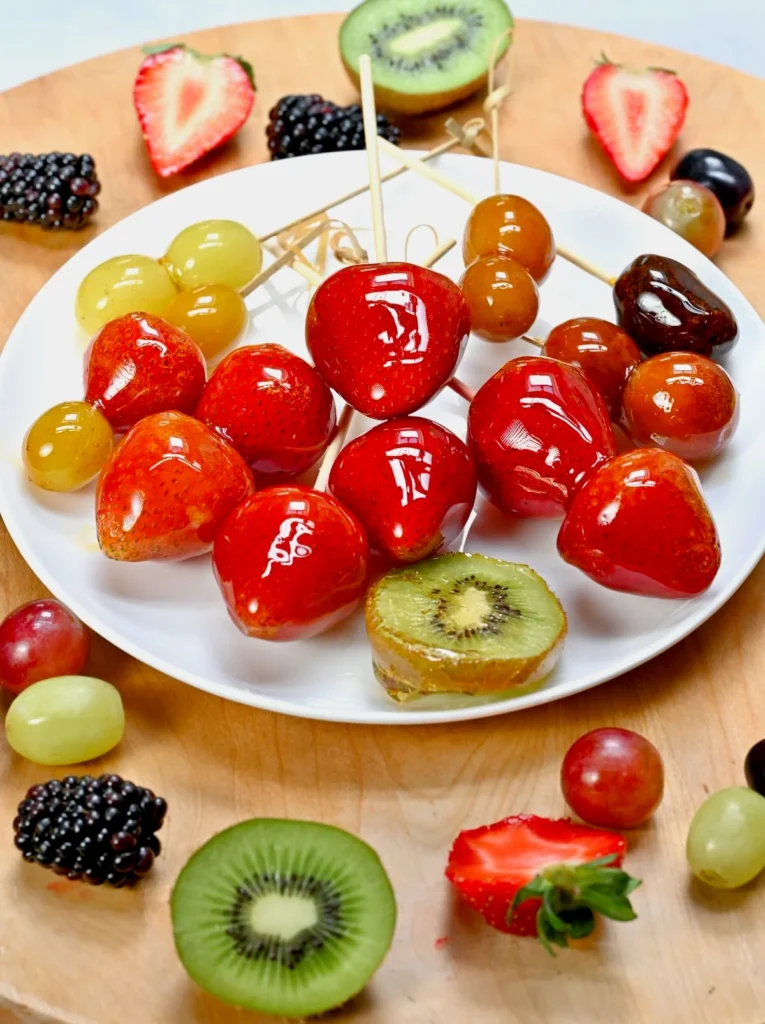
Have you ever seen those gorgeous fruit skewers covered in a glass-like candy shell and wondered how people make them? That’s Tanghulu! This popular Chinese street-food treat is made by dipping fresh fruit into a hot sugar syrup that hardens into a thin, crisp, shiny coating. The first bite is the best part—the candy shell cracks beautifully before you reach the juicy fruit underneath.
I love making Tanghulu because it looks much more complicated than it actually is. Once you understand how to prepare the fruit and cook the sugar syrup to the right temperature, you can make these beautiful treats right in your own kitchen.
Strawberries are probably the most recognizable choice, but you can also use grapes, blueberries, mandarin segments, kiwi, pineapple, or other firm fruits. The key is making sure the fruit is completely dry before it touches the hot syrup.
So, if you’re ready to make your own shiny, crunchy Tanghulu, let’s get started!
Recipe Origin & Story
Tanghulu is a traditional Chinese candied-fruit snack that is especially associated with northern China. Traditionally, fruits such as hawthorn berries are placed on bamboo skewers and coated in a hard sugar shell.
Over time, Tanghulu became popular beyond its traditional form, with strawberries, grapes, blueberries, and other fruits appearing in modern versions. Social media has also helped make Tanghulu popular around the world because of its beautiful appearance and satisfying crunchy texture.
The basic idea has remained wonderfully simple: fresh fruit, a skewer, sugar, water, and heat. The magic happens when the hot sugar syrup cools around the fruit and turns into a crisp candy shell.
Ingredient Spotlight
- Main Star: Fresh, firm fruit is the heart of Tanghulu. Strawberries and grapes are especially easy choices for beginners.
- Secret Boost: A tiny amount of corn syrup or glucose syrup can help reduce unwanted crystallization and produce a smoother candy coating.
- Quality Tips: Choose fresh, firm fruit without bruises. Most importantly, wash the fruit ahead of time and dry it extremely well before dipping.
Nutritional Benefits
The fruit inside Tanghulu provides vitamins, minerals, water, and naturally occurring antioxidants. Strawberries, for example, are a good source of vitamin C.
However, the crunchy coating is made primarily from sugar, so Tanghulu is best enjoyed as an occasional sweet treat rather than an everyday snack.
Making it at home gives you control over the size of each skewer and the thickness of the candy coating.
Adaptable Variations
- Fruit Swaps: Try strawberries, grapes, blueberries, pineapple chunks, kiwi, mandarin segments, or firm melon.
- Flavor Twists: Add a small amount of vanilla or citrus zest to the sugar syrup if desired, although traditional Tanghulu is usually kept simple.
- Colorful Skewers: Combine different fruits on one skewer to create colorful layers.
Cooking Science Explained
The most important part of Tanghulu is cooking the sugar syrup to the hard-crack stage. At this temperature, most of the water has evaporated, leaving concentrated sugar that quickly becomes hard when cooled.
This is why a candy thermometer is extremely helpful. The syrup should reach approximately 300–310°F (149–154°C).
Another important detail is keeping the fruit completely dry. Water on the surface of the fruit can cause the hot sugar coating to slide off instead of forming a smooth shell.
Once the fruit is dipped, the hot syrup cools almost immediately, creating the thin glass-like coating that gives Tanghulu its famous crunch.
Easy, Step-by-Step Recipe
Ingredients
- 1 pound fresh strawberries, grapes, or other firm fruit
- 2 cups granulated sugar
- ½ cup water
- 1 tablespoon light corn syrup or glucose syrup, optional
- Bamboo skewers
- Ice water, for testing the syrup
Instructions
- Wash the fruit thoroughly and remove any stems or unwanted pieces.
- Dry the fruit extremely well using paper towels. Let it air-dry for additional time if necessary. The fruit must be completely dry.
- Thread the fruit onto bamboo skewers. Avoid putting too much fruit on each skewer because it will make dipping more difficult.
- Line a baking sheet or large plate with parchment paper or a silicone baking mat.
- Add the sugar, water, and optional corn syrup to a clean saucepan.
- Heat the mixture over medium heat without stirring once the sugar begins dissolving.
- Continue cooking until the syrup reaches approximately 300–310°F (149–154°C) on a candy thermometer.
- If you don’t have a thermometer, carefully drop a tiny amount of syrup into ice water. It should immediately harden into a brittle thread or piece that cracks when broken.
- Remove the saucepan from the heat and allow the bubbles to settle briefly.
- Carefully dip each fruit skewer into the hot syrup, rotating it quickly so the fruit receives a thin, even coating.
- Allow excess syrup to drip back into the saucepan.
- Place the coated skewer onto the prepared parchment or silicone mat.
- Let it cool for several minutes until the candy shell becomes completely hard and crisp.
- Repeat with the remaining fruit, working quickly because the syrup will begin to thicken as it cools.
- Enjoy the Tanghulu immediately for the best crunchy texture.
Practical & Valuable Tips
- Dry Fruit Is Essential: Any moisture can prevent the sugar shell from sticking properly.
- Use a Candy Thermometer: It makes reaching the correct hard-crack stage much easier.
- Don’t Stir the Syrup: Stirring after the sugar has dissolved can encourage crystallization.
- Work Quickly: The syrup becomes thicker as it cools, making dipping more difficult.
- Keep the Coating Thin: A thin layer creates the delicate crunch that makes Tanghulu so enjoyable.
- Storage: Tanghulu is best eaten immediately. Humidity can make the sugar coating sticky and soft.
Make-Ahead & Batch-Cooking
Tanghulu isn’t really a make-ahead dessert because the candy coating gradually absorbs moisture from the air. For the best texture, prepare it shortly before serving.
You can, however, wash and completely dry the fruit ahead of time. Keep it refrigerated in a dry container, then bring it out and make sure there is no surface moisture before dipping.
If you’re making Tanghulu for a party, prepare the fruit skewers in advance and cook the sugar syrup shortly before guests arrive.
Eco-Friendly Kitchen Hacks
- Use reusable silicone baking mats instead of disposable parchment when possible.
- Choose seasonal local fruit for the best flavor and less food waste.
- Use reusable containers for storing prepared fruit.
- Plan the number of skewers you need so you don’t prepare more fruit than necessary.
- Compost fruit scraps when possible.
Pairing Suggestions
- Beverages: Green tea, jasmine tea, iced tea, sparkling water, or a lightly flavored fruit drink can balance the sweetness.
- Sides & Treats: Serve Tanghulu alongside other fresh fruit, small pastries, tea cakes, or simple Asian-inspired desserts.
Frequently Asked Questions
-
Why isn’t my sugar coating hardening?
The syrup probably didn’t reach the hard-crack stage. Continue cooking until it reaches approximately 300–310°F (149–154°C).
-
Why does the sugar coating slide off my fruit?
The fruit may still have moisture on its surface. Dry it extremely well before dipping.
-
Can I use frozen fruit?
Fresh fruit is strongly recommended because frozen fruit releases moisture as it thaws, making it difficult for the candy coating to stick.
-
How long does Tanghulu stay crunchy?
It’s best eaten soon after making it. Humidity can cause the sugar coating to become sticky, especially if it sits for a long time.
Call to Action
If you’ve always wanted to try making Tanghulu at home, this is your chance! Once you get the sugar syrup to the right temperature and make sure your fruit is completely dry, the process becomes surprisingly simple.
Try strawberries first if you’re a beginner, then experiment with grapes, blueberries, kiwi, pineapple, or colorful fruit combinations. If you make your own Tanghulu, share your favorite fruit combination and save this recipe for your next fun dessert project.
Bonus: Your Kitchen Notes
The biggest lesson I learned when making Tanghulu is that patience matters. Don’t rush the sugar syrup, and don’t skip the drying step. Those two details make a huge difference in the final result.
I also recommend making a few test skewers before preparing a large batch. This gives you a chance to check the thickness and crunch of your candy coating. If the coating is too thick, dip more quickly and allow more syrup to drip away. If it isn’t hardening, check the temperature of the syrup.
Use this section in your WordPress editor to record which fruits worked best, how thick you prefer the candy coating, and any tricks you discover along the way.
There is something incredibly satisfying about biting through that crisp sugar shell and reaching the juicy fruit inside. Tanghulu turns simple fresh fruit into a fun, beautiful treat—and once you learn the technique, you’ll be ready to create your own colorful skewers whenever the craving strikes.
Important kitchen safety note: Hot sugar syrup can cause serious burns. Keep children and pets away from the cooking area, use heat-safe equipment, and handle the saucepan and skewers carefully.