Personalized Introduction
There’s something incredibly comforting about making homemade Dango. These soft, chewy Japanese rice dumplings are simple to prepare, yet they feel special every time they’re served. Made with just a handful of ingredients, Dango has a pleasantly chewy texture that’s unlike any other dessert. Whether you enjoy them plain, coated in sweet soy glaze, or paired with green tea, they’re a wonderful treat for any time of the year.
The first time I made Dango, I was amazed by how easy the recipe was. Watching small balls of rice dough float to the top of the boiling water felt almost magical, and the chewy texture made every bite completely different from ordinary cookies or cakes.
One of my favorite things about this recipe is how versatile it is. You can enjoy Dango warm or chilled, decorate it with colorful seasonal toppings, or serve it on skewers with a glossy sweet soy glaze. It’s a fun recipe that’s perfect for sharing with family and friends.
Whether you’re exploring Japanese desserts for the first time or recreating a favorite treat from a festival, this Homemade Dango Recipe is simple, authentic, and absolutely delicious.
Recipe Origin & Story
Dango has been enjoyed in Japan for hundreds of years and is commonly served during traditional festivals, tea ceremonies, and seasonal celebrations. Unlike Mochi, which is made from pounded sticky rice, Dango is prepared using rice flour mixed with water to create a soft dough before being boiled.
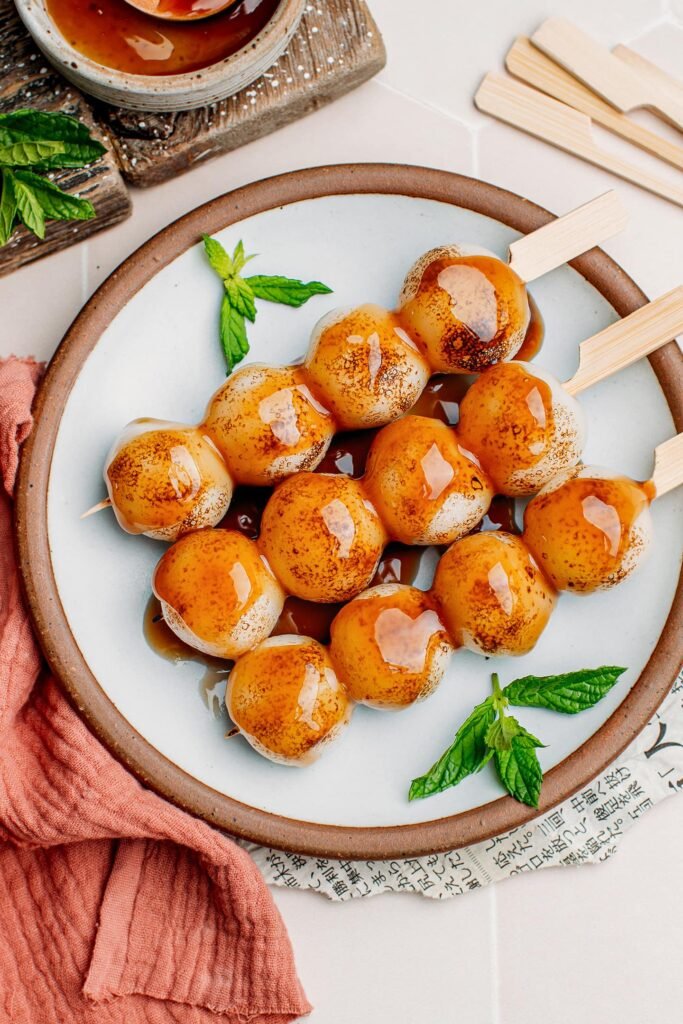
Many different varieties of Dango exist throughout Japan. Mitarashi Dango is coated in a glossy sweet soy sauce glaze, Hanami Dango features colorful pink, white, and green dumplings for cherry blossom season, while other versions are topped with sweet red bean paste, roasted soybean flour, or black sesame.
Its simple ingredients and beautiful presentation have made Dango one of Japan’s most beloved traditional sweets, enjoyed by both children and adults.
Every time I prepare these little dumplings, they remind me that some of the most memorable desserts come from the simplest recipes.
Ingredient Spotlight
- Main Star: Shiratamako or glutinous rice flour gives Dango its signature soft and chewy texture.
- Secret Boost: A sweet soy glaze adds the perfect balance of sweetness and savory richness.
- Perfect Texture: Warm water helps create a smooth, soft dough that is easy to shape.
- Quality Tips: Use authentic Japanese glutinous rice flour, fresh soy sauce, and good-quality sugar for the best traditional flavor.
Nutritional Benefits
Rice flour is naturally gluten-free, making Dango a great dessert option for people avoiding wheat when prepared with certified gluten-free ingredients.
Because the recipe uses only a few ingredients, it’s easy to control the sweetness by adjusting the glaze to your taste.
Homemade Dango contains no artificial preservatives, making it a fresh and simple dessert that’s perfect for sharing.
Enjoying small portions alongside tea makes this traditional treat satisfying without being overly heavy.
Adaptable Variations
- Mitarashi Dango: Coat the dumplings with a glossy sweet soy sauce glaze.
- Hanami Dango: Divide the dough and color portions pink, white, and green before shaping.
- Kinako Version: Roll warm Dango in roasted soybean flour mixed with sugar.
- Red Bean Version: Top each skewer with sweet red bean paste.
- Seasonal Spins: Add matcha during spring, pumpkin puree in autumn, strawberry powder in summer, or black sesame paste during winter.
Cooking Science Explained
Glutinous rice flour contains starches that become wonderfully chewy when mixed with hot water and cooked, creating Dango’s signature texture.
The dumplings are fully cooked once they float to the surface of the boiling water, a simple indicator that makes the recipe beginner-friendly.
Immediately transferring the cooked Dango into ice water stops the cooking process and helps maintain their pleasantly chewy texture.
The sweet soy glaze thickens because cornstarch activates as it simmers, creating a shiny coating that clings beautifully to every dumpling.
Easy, Step-by-Step Recipe
Ingredients
For the Dango:
- 1 cup (150g) shiratamako or glutinous rice flour
- ½ cup warm water (adjust as needed)
For the Mitarashi Glaze:
- 2 tablespoons soy sauce
- 3 tablespoons granulated sugar
- ½ cup water
- 1 tablespoon cornstarch
- 1 teaspoon mirin (optional)
Optional Garnishes:
- Roasted sesame seeds
- Kinako (roasted soybean flour)
- Sweet red bean paste
- Matcha powder
Instructions
- Place the glutinous rice flour in a mixing bowl.
- Gradually add the warm water while mixing until a smooth, soft dough forms.
- Knead gently until the dough is smooth and holds together without cracking.
- Divide the dough into small equal portions and roll each into a smooth ball.
- Bring a large pot of water to a gentle boil.
- Carefully add the Dango balls to the boiling water.
- Cook until the dumplings float to the surface, then continue cooking for another 2 to 3 minutes.
- Transfer the cooked Dango into a bowl of ice water for several minutes.
- Drain well and thread three or four dumplings onto each bamboo skewer.
- For the glaze, combine the soy sauce, sugar, water, cornstarch, and mirin in a small saucepan.
- Cook over medium heat while stirring continuously until the glaze becomes thick and glossy.
- Brush or spoon the warm glaze over the skewered Dango and serve immediately.
Practical & Valuable Tips
- Dough Tip: Add the water slowly because different rice flours absorb moisture differently.
- Rolling Tip: Wet your hands lightly to prevent the dough from sticking.
- Cooking Tip: Don’t overcrowd the pot so the dumplings cook evenly.
- Serving Tip: Enjoy Dango fresh for the softest and chewiest texture.
- Storage: Store leftovers in an airtight container in the refrigerator for up to 2 days.
Make-Ahead & Batch-Cooking
The dough can be prepared several hours ahead and kept covered to prevent it from drying out before shaping and cooking.
Cooked Dango is best enjoyed the same day, but leftovers can be gently reheated by dipping them briefly into hot water before serving.
The sweet soy glaze can be prepared in advance and reheated gently whenever needed.
Eco-Friendly Kitchen Hacks
- Reuse bamboo skewers after washing them thoroughly.
- Prepare only the amount you’ll enjoy fresh to reduce food waste.
- Store leftover glaze in reusable glass jars.
- Use any extra rice flour for other homemade Japanese desserts.
Pairing Suggestions
- Beverages: Matcha tea, green tea, jasmine tea, roasted barley tea, or lightly sweetened iced tea pair beautifully with Dango.
- Side Treats: Fresh fruit, sweet red bean paste, mochi, Japanese cheesecake, or black sesame ice cream make wonderful companions.
- Extra Toppings: Kinako powder, toasted sesame seeds, matcha powder, chopped roasted peanuts, or extra Mitarashi glaze add delicious finishing touches.
Frequently Asked Questions
- What’s the difference between Dango and Mochi?
Dango is made from rice flour, while Mochi is traditionally made by pounding steamed glutinous rice. - Can I make Dango without skewers?
Yes. The dumplings are delicious served in a bowl with the glaze spooned over the top. - Can I freeze Dango?
Yes. Freeze cooked dumplings in a single layer and gently reheat before serving. - Why is my Dango too hard?
The dough may have been too dry or the dumplings may have been overcooked. - Can I use regular rice flour?
No. Glutinous rice flour is essential for achieving Dango’s signature chewy texture.
Call to Action
If you’ve been wanting to try a traditional Japanese dessert at home, this Homemade Dango Recipe is the perfect place to start. Soft, chewy, beautifully simple, and endlessly customizable, it’s a dessert that’s both fun to make and even more enjoyable to share.
Save this recipe for tea time, special celebrations, or whenever you’re craving something unique. Share it with your friends and family, experiment with different toppings, and enjoy every soft and chewy bite. Happy cooking!
Bonus: Your Kitchen Notes
Every Dango recipe becomes a little more personal each time you make it. Use this section to record your favorite glaze consistency, toppings, food coloring combinations, or seasonal flavors.
Maybe your perfect version includes matcha, black sesame, sweet red bean paste, kinako, or colorful Hanami Dango. Keep your notes here so you can recreate your favorite Homemade Dango every single time.